Legislative Decree 176/2026 on the right to repair: obligations from 22 October 2026
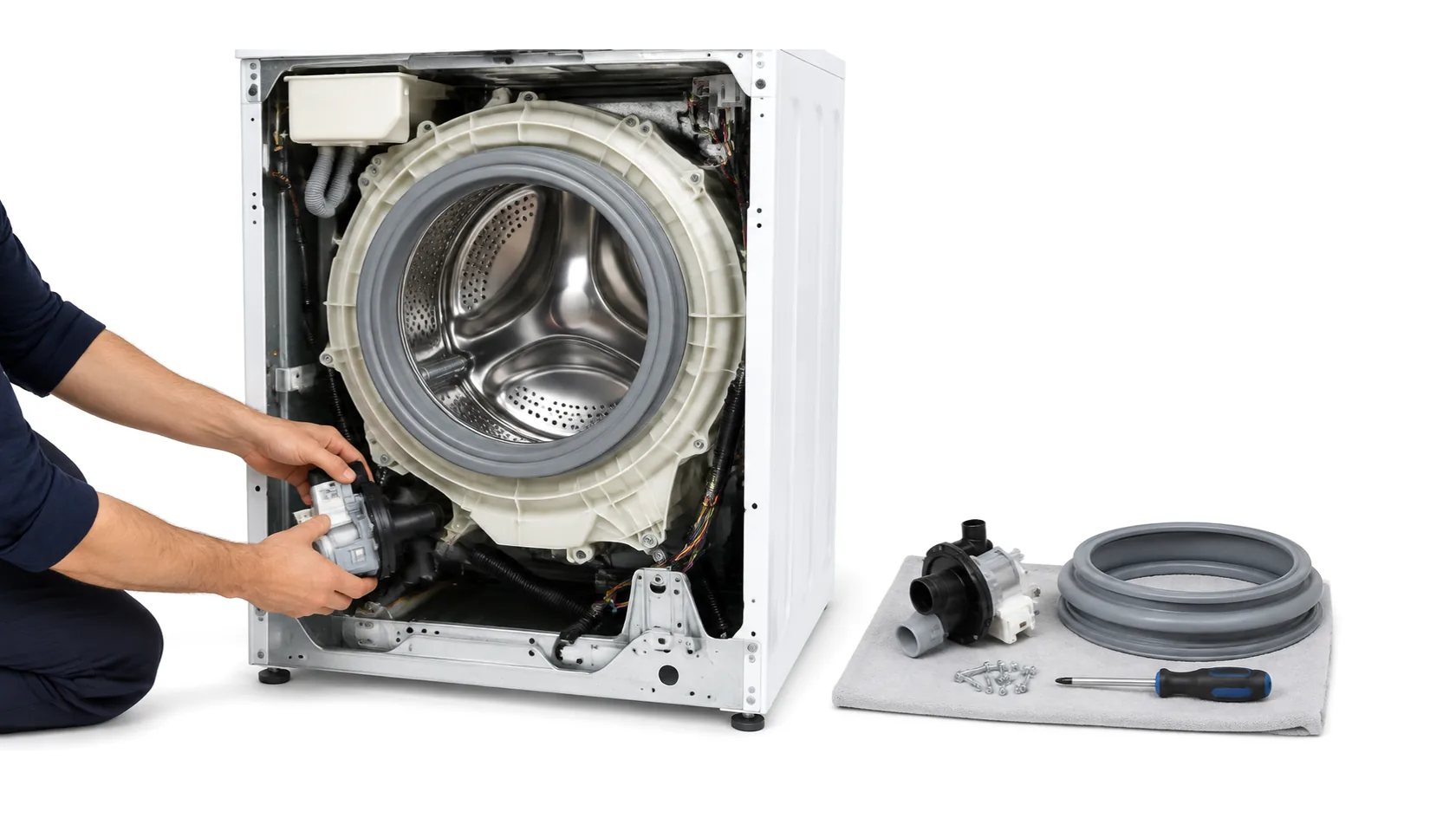
On 22 October 2026, Legislative Decree 176/2026 enters into force. It transposes into Italian law Directive (EU) 2024/1799 on the repair of goods. The decree adds to the Italian Consumer Code a title dedicated to repair. For eleven product groups, from washing machines to smartphones, the manufacturer must repair the goods at the consumer’s request. The obligation covers defects that do not fall under the seller’s legal guarantee. If the manufacturer is established outside the European Union, the obligation passes to the authorised representative in the Union, in its absence to the importer and, if there is no importer, to the distributor.
Legislative Decree 176/2026 also amends the legal guarantee with rules that apply to contracts concluded from 31 July 2026. Infringements of the repair obligations are subject to a penalty from €5,000 to €50,000 each. The Italian Competition Authority (AGCM) establishes them.
- In force from
- 22 October 2026
- Law
- Legislative Decree of 25 September 2026, No. 176which amends the Italian Consumer Code
- Legal guarantee
- New rulesfor contracts concluded from 31 July 2026
- Penalties on repair
- From €5,000 to €50,000per infringement (limits doubled in particularly serious cases or repeat offences)
- Penalties on guarantees
- From €5,000 to €10,000,000depending on the seriousness and duration of the infringement and the economic and financial conditions of the infringer
- Authority
- AGCMItalian Competition Authority

What changes with Legislative Decree 176/2026?
Legislative Decree 176/2026 brings into Italian law the European rules that promote the repair of goods purchased by consumers. Directive (EU) 2024/1799 required Member States to apply them from 31 July 2026. The decree was published in the Italian Official Journal No. 233 of 7 October 2026 and enters into force on 22 October 2026.
Legislative Decree 176/2026 covers four areas:
- A new title of the Italian Consumer Code, “On the repair of goods”, with the manufacturer’s obligation to repair, the European repair information form and the penalties
- The rules on the legal guarantee of conformity, which take into account repair as a remedy
- The Ministry of Enterprises and Made in Italy (MIMIT) as the contact point for the national section of the European online platform for repair
- A National Repair Observatory at the MIMIT, which collects data on the sector and follows its trends
The European framework of the directive is described on the page Right to Repair: Directive (EU) 2024/1799 and the obligations from 31 July 2026.
Which products fall under the repair obligation of Legislative Decree 176/2026?
The repair obligation covers only goods for which the European Union legal acts listed in the new Annex II-decies to the Italian Consumer Code lay down repairability requirements. These are the requirements that make it possible to repair goods, such as ease of disassembly and access to spare parts, information and tools for repair. Legislative Decree 176/2026 lists eleven acts.
| Product | European Union act |
|---|---|
| Household washing machines and household washer-dryers | Regulation (EU) 2019/2023 |
| Household dishwashers | Regulation (EU) 2019/2022 |
| Refrigerating appliances | Regulation (EU) 2019/2019 |
| Electronic displays | Regulation (EU) 2019/2021 |
| Welding equipment | Regulation (EU) 2019/1784 |
| Vacuum cleaners | Regulation (EU) No 666/2013 |
| Servers and data storage products | Regulation (EU) 2019/424 |
| Mobile phones, cordless phones and slate tablets | Regulation (EU) 2023/1670 |
| Household tumble dryers | Regulation (EU) 2023/2533 |
| Goods incorporating light means of transport batteries | Regulation (EU) 2023/1542 |
| Domestic local space heaters | Regulation (EU) 2024/1103 |
The obligation applies to these goods to the extent that the relevant act lays down repairability requirements. For products outside the list, the repair obligation does not apply. The rules on the European repair information form and those on the legal guarantee apply instead to all goods purchased by consumers.
The list follows the development of the European rules. When Annex II to the directive is amended, a MIMIT decree updates Annex II-decies. Domestic local space heaters, the last item on the list, were added to the directive’s list by Delegated Directive (EU) 2026/74.
Who must repair and under what conditions?
The obligation lies with the manufacturer and covers defects that occur or become apparent outside the seller’s liability under the legal guarantee. The Italian Consumer Code refers to the definition in the Ecodesign for Sustainable Products Regulation, Regulation (EU) 2024/1781, under which the manufacturer is:
“any natural or legal person that manufactures a product or that has a product designed or manufactured, and markets that product under their name or trademark”
A company that has goods manufactured abroad and sells them under its own trademark is therefore the manufacturer of the goods.
If the manufacturer is established outside the European Union, the obligation passes to other parties in this order:
- The manufacturer’s authorised representative in the European Union
- The importer of the goods, if the manufacturer has no authorised representative
- The distributor of the goods, if there is no importer
The obliged party may entrust the repair to a third party, for example a service centre. According to the directive, whoever entrusts the repair to third parties remains liable for the obligation.
Legislative Decree 176/2026 sets the conditions of the repair:
- It is carried out free of charge or at a reasonable price
- It is carried out within a reasonable time from the moment the manufacturer takes physical possession of the goods, receives them or is given access to them
- For the duration of the repair, the manufacturer may lend replacement goods free of charge or at a reasonable cost
- If repair is impossible, the manufacturer is not obliged to repair and may offer the consumer refurbished goods
Legislative Decree 176/2026 does not set amounts or days for the reasonable price and time. The consumer remains free to turn to any repairer.
Any agreement that, to the detriment of the consumer, excludes the rules on repair, derogates from them or changes their effects is void. The repairer may instead offer the consumer more favourable conditions.
What other obligations concern spare parts, prices and information?
Besides repair, Legislative Decree 176/2026 introduces other obligations for the goods on the list:
- Manufacturers that make spare parts and tools available offer them at a reasonable price that does not discourage repair
- The party obliged to repair makes the indicative prices of typical repairs accessible through a freely accessible website
- The obliged party makes clear and easily accessible information on its repair services available free of charge at least for the whole duration of the obligation
- Manufacturers cannot refuse repair solely because the goods have already been repaired by others
Manufacturers cannot use contractual clauses, hardware or software that prevent repair, unless justified by legitimate and objective factors, such as the protection of intellectual property. In particular, they cannot prevent independent repairers from using original, second-hand, compatible or 3D-printed spare parts. The ban applies to parts that comply with legal requirements (for example on product safety) or with intellectual property rules.
If the manufacturer is established outside the European Union and has no authorised representative in the Union, the repair obligation, access to indicative prices through a freely accessible website and information on repair services fall on the importer.
What changes for the legal guarantee with Legislative Decree 176/2026?
The amendments to the legal guarantee of conformity apply to contracts concluded from 31 July 2026. They therefore also apply to sales concluded between 31 July and 21 October 2026, before the entry into force of Legislative Decree 176/2026. They concern all goods sold to consumers, not only those on the list.
There are four new elements:
- Alongside durability, functionality, compatibility and safety, repairability becomes one of the features that goods must have to be in conformity. It counts if it is normal for goods of the same type and the consumer can reasonably expect it
- If the seller repairs the goods as the remedy for a lack of conformity, the seller’s liability period is extended once by twelve months
- Before providing the remedy, the seller informs the consumer of the right to choose between repair and replacement and of the possible twelve-month extension
- During the repair, the seller may provide replacement goods free of charge, to be returned, including refurbished goods. At the consumer’s explicit request, the seller may replace the defective goods with refurbished goods
The extension does not turn the legal guarantee into a three-year guarantee for every sale, because it only applies when the remedy is repair. The European tools that inform the consumer about the legal guarantee and the commercial guarantee of durability, that is the harmonised notice and label, are described on the page on the legal and commercial guarantee.
Who enforces Legislative Decree 176/2026 and what penalties does it set?
The AGCM establishes infringements on its own initiative or at the request of anyone with an interest, prohibits their continuation and eliminates their effects.
For the repair obligations, the penalty is:
- From €5,000 to €50,000 per infringement, taking into account the seriousness and duration of the infringement and the economic and financial conditions of the infringer
- From €10,000 to €100,000 in particularly serious cases or repeat offences, because the minimum and maximum limits are doubled
The penalty concerns manufacturers, authorised representatives, importers, distributors and repairers. It applies to infringements of the rules on the European form, on information on repair services and on the repair obligation, including the obligations on spare parts, indicative prices and obstacles to repair described above. It does not apply if the conduct is a criminal offence or infringes the Consumer Code rules on commercial practices and advertising, which follow their own rules.
For the legal guarantee and commercial guarantees, Legislative Decree 176/2026 adds to the Italian Consumer Code a penalty provision that refers to the rules on unfair commercial practices for enforcement and penalties. The penalty is:
- From €5,000 to €10,000,000, taking into account the seriousness and duration of the infringement and the economic and financial conditions of the infringer
- Up to 4% of the annual turnover generated in Italy or in the Member States concerned, when the penalty is imposed within the cooperation between European consumer protection authorities (€2,000,000 if turnover data are not available)
What are the European form and the repair platform?
The European repair information form is a document that the repairer may provide to the consumer before the repair contract. It is not mandatory. If the repairer provides it, some rules apply:
- It is provided on a durable medium and free of charge, except for the cost of the diagnosis needed to identify the defect and estimate the price, of which the consumer must be informed
- It states price, timing and conditions of the repair in a clear and comprehensible way
- The conditions remain unchanged for thirty days, unless a longer period is agreed
- If the consumer accepts them within the validity period, the repairer carries out the repair under those conditions
If the repairer does not carry out the accepted repair, the consumer is entitled to a refund of the diagnosis costs.
The national section of the European online platform for repair is set up when the European Commission activates the platform. Repairers, sellers of refurbished goods, purchasers of defective goods for refurbishment and community-led repair initiatives may register on it. Use is free of charge for consumers. The MIMIT is the contact point with the Commission and monitors the data of the national section to detect and remove invalid information.
Frequently asked questions (FAQ)
From when do the obligations of Legislative Decree 176/2026 apply?
The repair obligations apply from 22 October 2026, the date on which the decree enters into force. The amendments to the legal guarantee apply instead to contracts concluded from 31 July 2026.
Does the right to repair apply to all products?
No. The manufacturer’s repair obligation covers only the eleven product groups of Annex II-decies to the Italian Consumer Code. The amendments to the legal guarantee and the rules on the European form apply instead to all goods purchased by consumers.
Can an importer be required to repair?
Yes. Under Legislative Decree 176/2026, if the manufacturer is established outside the European Union and has no authorised representative in the Union, the obligation falls on the importer. If the company has the goods manufactured and sells them under its own trademark, it is itself the manufacturer.
Does the legal guarantee become three years?
No. The seller’s liability period is extended once by twelve months only when the seller repairs the goods as the remedy for a lack of conformity. Before the remedy, the seller informs the consumer of this possibility.
Must the consumer use the manufacturer’s service centre?
No. For the goods on the list, without prejudice to the manufacturer’s repair obligation, the consumer may turn to any repairer. The manufacturer cannot prevent independent repairers from using spare parts that comply with legal requirements, unless justified by legitimate and objective factors.
Is the European repair information form mandatory?
No. The repairer chooses whether to provide it. If it is provided, the conditions indicated remain valid for thirty days and the repairer complies with them if the consumer accepts them.
What penalties does Legislative Decree 176/2026 set?
For the rules on repair, spare parts, indicative prices, information and the European form, the penalty ranges from €5,000 to €50,000 per infringement. In particularly serious cases or repeat offences the limits are doubled. For the legal guarantee and commercial guarantees, the penalty ranges from €5,000 to €10,000,000. In both cases, the AGCM establishes the infringements.
Do you need support for your product compliance?
Don’t let compliance become an obstacle.
I am also available for an informal, no-obligation conversation.