
CE Mark Not Applicable: When Not to Affix it and Consequences of Misuse
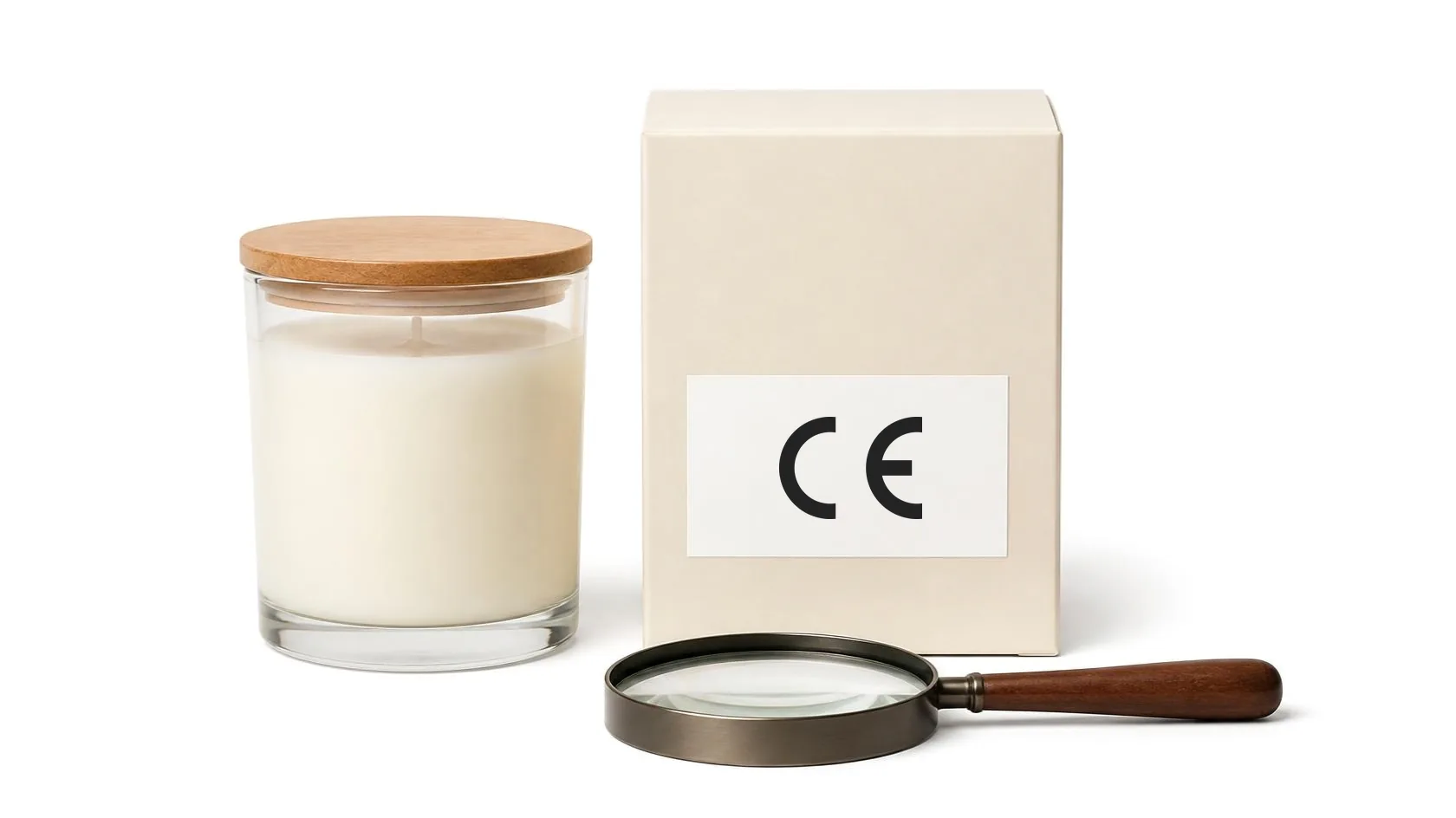
CE marking is a mandatory legal attestation exclusively for products covered by specific EU harmonisation legislation. Contrary to popular belief, it is not a quality mark!
Affixing it to products for which it is not intended is a severely punishable offence. Misuse, whether intentional or due to ignorance, exposes manufacturers, importers, and distributors to serious legal and commercial risks, including customs blocks, market withdrawals, and criminal penalties.

Understanding when not to use the CE mark is a fundamental strategic skill for every economic operator. Many mistakenly believe that the CE mark is a symbol of quality or safety, which can be voluntarily affixed to reassure consumers, and that it is “an added bonus.” This perception is wrong and dangerous!
The CE mark is a legal declaration of conformity with a scope strictly defined by European legislation. Article 30 of Regulation (EC) 765/2008 clearly establishes that:
“the CE marking shall be affixed only to products to which its affixing is provided for by specific Community harmonisation legislation, and shall not be affixed to any other product.”
The law, therefore, categorically prohibits CE marking products for which it is not explicitly required. Affixing the CE mark to a non-subject product (i.e., a product for which the CE mark is not applicable), such as furniture or an item of clothing, misleads both consumers and surveillance authorities, falsely suggesting that the product has undergone assessment procedures and complies with essential EU requirements that, in reality, do not exist for that product category. To avoid incurring this serious offense, it is crucial to accurately identify product categories that are excluded from the marking obligation.
Products Excluded from CE Marking: A Practical Guide
Correctly identifying products excluded from CE marking (for which it is, therefore, “not applicable”) is the first step to avoiding costly errors. Some examples of products for which the CE mark is prohibited:
- Furniture and non-electrical home furnishings
Chairs, tables, wardrobes, and mattresses are not covered by harmonisation directives/regulations requiring the CE mark. Their safety is regulated by other standards. - Textile products and common clothing
Garments, household linen, and footwear do not fall under CE regulations, except for specific cases like Personal Protective Equipment (PPE). - Stationery items
Pens, pencils, notebooks, and other common use materials are excluded, unless they have additional functionalities (e.g., play features) that place them in other categories. - Decorative and collectible items
Ornaments, non-electrical decorations, and folkloric dolls are explicitly excluded from the Toy Safety Directive if not intended for play. - Candles
Do not fall under any harmonisation directive (they are not electrical products, toys, or PPE) and therefore must not be CE marked. - Cutlery, tableware, and non-electrical kitchen utensils
Plates, glasses, and pots are regulated by standards on food contact materials but do not require CE marking. - Cosmetics
These sectors are highly regulated by specific legislation (Cosmetic Regulation 1223/2009) which does not provide for the affixing of the CE mark. - Traditional musical instruments (non-electrical)
Acoustic guitars, violins, and pianos intended for musicians are considered neither toys nor electrical appliances and are therefore excluded. - Luggage and bags
Suitcases, bags, and backpacks for common use are not covered by directives imposing CE marking and fall under general product safety. - Non-electrical personal care items
Brushes, combs, manual razors, and other similar tools are excluded, unlike their electrical counterparts which require marking. - Manual gardening tools
Hoes, rakes, spades are subject to general safety requirements and do not require the CE mark.
Although these products should not bear the CE mark, they must still be safe and comply with other European regulations, such as the General Product Safety Regulation (GPSR – Reg. EU 2023/988). However, classification is not always straightforward. There are numerous “borderline” cases where seemingly similar products have completely different regulatory requirements.
FFP2 masks are classified as Personal Protective Equipment (PPE) and must mandatorily be CE marked.
Requires CE Marking (PPE)Community or “fashion” masks, not intended for certified protection, are excluded.
General Safety (GPSR)A power strip, considered a complete electrical apparatus, fully falls within scope and must be CE marked.
Requires CE MarkingSingle electrical plugs and sockets for domestic use are explicitly excluded from the Low Voltage Directive and do not bear the CE mark.
General Safety (GPSR)Decorative fairy lights are an electrical product and fall under the Low Voltage Directive.
Requires CE MarkingSimple garlands are inert decorative items and do not require CE marking.
General Safety (GPSR)A “candle” that mimics a flame with a battery-powered LED is an electrical/electronic appliance subject to CE marking.
Requires CE MarkingA consumer item subject to fire safety standards and REACH/CLP, but does not bear the CE mark.
General Safety (GPSR/REACH)A puzzle intended for children is a toy in all respects and must be CE marked.
Toy Safety Dir. (CE)A specialist puzzle (>500 pieces) is considered an adult product and does not fall under the Toy Safety Directive.
General Safety (GPSR)The screwdriver, even if battery-operated, is considered “machinery” and can generate electromagnetic disturbances.
Machinery/EMC Dir. (CE)The manual screwdriver is an inert tool, subject exclusively to general safety obligations.
General Safety (GPSR)Equipped with electrical functions, it becomes an apparatus falling under “New Approach” directives.
Requires CE MarkingA simple mirror is a furniture item, subject to General Product Safety Regulation (GPSR) obligations.
General Safety (GPSR)The Toy Safety Directive classifies bicycles with a maximum saddle height of 435 mm as toys. These must be CE marked.
Toy Safety Dir. (CE)Larger children’s bicycles, exceeding this measurement, are excluded and fall under the GPSR (and specific technical standards), not requiring CE marking.
General Safety (GPSR)Intended use and added functionality can drastically change the regulatory status of a product. A superficial analysis can lead to illicit affixing of the CE mark or, conversely, a dangerous omission.
In case of doubt, analyzing the function and intended use determines the correct classification. Acting without this verification exposes one to a high risk of regulatory violation.
The Three Main Forms of CE Mark Misuse
Violations related to CE marking are not limited to a single type of error but manifest in various forms, each with specific and serious legal implications.
-
Affixing to Non-Subject Products
This is the most direct violation of the fundamental principle and often results from ignorance or wilful intent. It involves affixing the CE mark to products for which it is not applicable (e.g., furniture, stationery, textiles,…). This practice misleads the market by suggesting conformity to essential EU safety requirements that do not exist for that product.
-
Use of Misleading Marks (such as the “China Export”)
This form of offense involves using graphic symbols that deliberately imitate the official CE mark to deceive. The best-known example is the so-called “China Export” mark, where the letters C and E are closer together than in the official logo. This is not a recognised mark, but a false sign whose sole purpose is to evade controls and deceive importers, authorities, and consumers. It is considered an attempt at fraud in all respects.
-
Marking of Harmonised but Non-Compliant Products
This is the most serious violation because it masks a real danger to health and safety. In this case, the CE mark is affixed to a product that should have it (e.g., a toy, a charger, an FFP2 mask) but which, in reality, does not meet the essential safety requirements provided by the regulations. The mark is false because the Declaration of Conformity supporting it is misleading, and the product is potentially dangerous.
CE Mark vs. China Export
The non-compliance of the “China Export” logo specifically lies in the reduced distance between the “C” and the “E”. The only way to identify the problem is to compare the official proportions (based on the grid scheme) with the symbol affixed to the product.


The misuse of the CE mark is not a trivial detail but an offense that exposes the entire supply chain to tangible financial, operational, and criminal risks. The consequences can compromise the continuity of the business itself.
Criminal Implications: Commercial Fraud and Misleading Signs
The abuse of the CE mark is classified by case law as a criminal offense. The two most common types are:
- Art. 515 c.p. (Commercial Fraud): occurs when a product with a false CE mark is sold, effectively delivering one thing (an unsafe product) for another (a product compliant with EU standards).
- Art. 517 c.p. (Sale of Products with Misleading Signs): applies to the affixing of the CE mark to non-subject products (for which it is “not applicable”) or the use of deceptive symbols like the “China Export,” as it misleads the buyer about the quality of the good.
How to Protect Yourself: Operational Recommendations for the Supply Chain
Preventing risks associated with CE marking requires a proactive approach and diligence involving every actor in the supply chain. Each economic operator has specific responsibilities.
- Manufacturer: must correctly classify the product based on its function and intended use. It is their task to determine whether CE marking is mandatory or prohibited (not applicable) and to draw up the supporting technical documentation.
- Importer: is the most legally exposed party and acts as the first control filter on the EU market. Their responsibility goes far beyond a simple formal verification:
- Contractual Due Diligence: supply contracts must oblige the supplier to guarantee the validity of the CE mark, the existence of a complete Technical File, and the absence of deceptive marks like the “China Export.” Crucially important is the inclusion of indemnity clauses, designed to fully cover the importer for all costs resulting from non-compliance: penalties, market withdrawal expenses, legal fees, and reputational damage.
- Documentary Due Diligence: one should not rely solely on the Declaration of Conformity (DoC), which is a self-declaration by the manufacturer. It is a strategic best practice to systematically request and archive complete Test Reports issued by accredited laboratories. These documents are the real proof of conformity and the heart of the Technical File. A supplier who cannot or will not provide them is, in fact, admitting non-compliance.
- Distributor: must exercise diligence-based control. This includes a visual inspection of products to ensure that those subject to marking bear it correctly (along with the importer’s details) and, conversely, that non-subject products (to which the CE mark is not applicable) do not have it.
Careful and informed compliance management is not a cost, but an investment that protects the entire supply chain from devastating legal, financial, and reputational consequences.
Frequently Asked Questions (FAQ)
Can I affix the CE mark to any product to show “excessive diligence”?
No, it is strictly prohibited. CE marking is not a mark of quality, but a legal attestation reserved only for specific product categories. Affixing it to a non-subject product (for which it is not applicable), such as furniture, constitutes a criminal and administrative offense because it is misleading information.
What is the difference between a false CE mark and the “China Export” symbol?
A “false” (or counterfeit) CE mark is graphically correct but affixed to a product that should have it but does not comply with safety requirements. The “China Export” symbol, however, is a graphically similar but different logo (with the letters C and E closer together), created to deceive and has no legal value. It is considered a “misleading sign”.
If I import a product without a CE mark from a non-EU supplier, can I affix it myself?
No. The responsibility for affixing the CE mark lies with the manufacturer, who must carry out the entire conformity assessment procedure and draw up the Declaration of Conformity. The importer’s role is to verify that the manufacturer has correctly fulfilled all their obligations, not to replace them.
As a distributor, what are my minimum responsibilities to avoid penalties?
The distributor has an obligation of diligence and visual inspection. They must verify that products subject to CE bear the mark and the importer’s information, and that non-subject products (for which it is not applicable) do not have it. If an evident irregularity is detected, they must refrain from marketing the product and inform the importer or authorities.
Is a product without a CE mark automatically an unsafe product?
No. Many products (such as furniture, textiles, candles) must not have the CE mark because it is not applicable to them, but they must still be safe and comply with other regulations, such as the General Product Safety Regulation (GPSR). The absence of the CE mark only means that the product does not fall under a harmonisation directive that requires it.
Do you need support for your product compliance?
Do not let the CE mark become an obstacle.
I am available for an informal and non-binding conversation as well.