
Toys Safety: From CE Marking to Digital Product Passport (DPP)
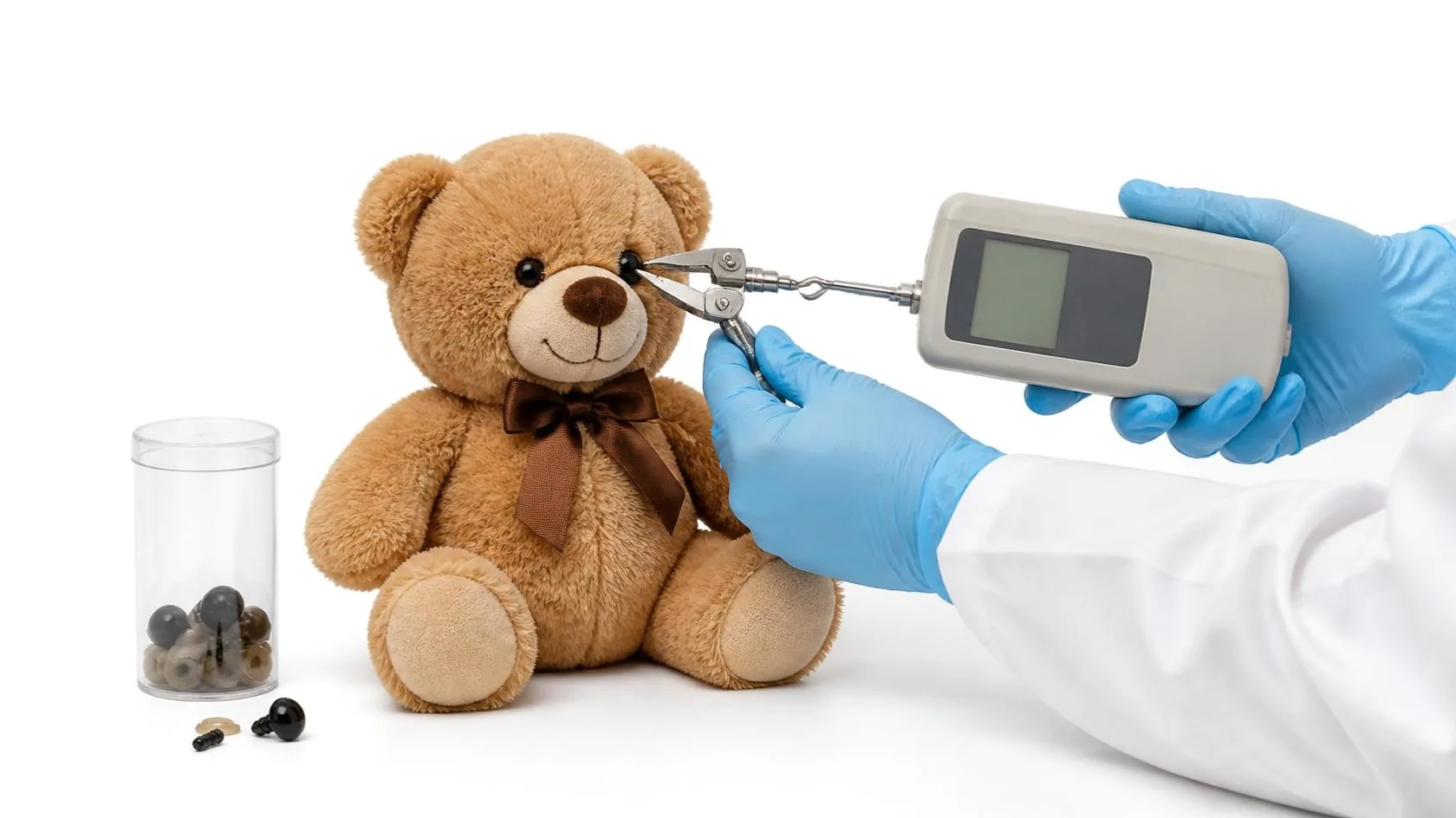
Toy compliance evolves from the static documentation required by Directive 2009/48/EC to a digital and traceable system introduced by the new Regulation (EU) 2025/2509 and the Digital Product Passport (DPP).
The most common non-compliances do not stem from design errors, but from deficiencies in mass production control.
Economic operators must act now to map supply chains and requirements, ensuring a safe transition to the new regulatory framework.

Why Directive 2009/48/EC is More Than Just a Test
CE marking is not a final test, but proof of a structured compliance process.
Its validity is based on the synergy between legal requirements (the directive) and technical solutions (standards), fully documented in the technical file.
Current compliance is based on essential safety requirements and their satisfaction through harmonized standards. The technical file is the documentary proof that this process was followed correctly.
Essential Toys Safety Requirements vs Harmonized Standards
- Essential safety requirements: these are the mandatory objectives defined by Directive 2009/48/EC, establishing what the toy must guarantee (e.g., “must not strangle”, “must not be flammable”), without specifying how.
- Harmonized standards: these are technical solutions (e.g., the EN 71 series) indicating how to achieve the objectives. Their application confers a “presumption of conformity” to the product, simplifying the manufacturer’s path.
The use of harmonized standards allows the manufacturer to use the internal production control procedure (Module A); in the absence of standards, or in case of partial application, it is mandatory to resort to EC Type-Examination by a Notified Body (Module B+C).
| Essential Requirement (Directive 2009/48/EC) | Requirement Detail | Reference Harmonized Standard (Technical Solution) | Notes |
|---|---|---|---|
| Physical and Mechanical Properties | Structural integrity, edges, points, choking risk (small parts), entrapment. | EN 71-1 | Covers, for example, small parts (choking hazard), acoustics (sound pressure limits), cords and drawstrings (strangulation hazard), projectiles. |
| Flammability | Prohibition of highly flammable materials; low rate of flame spread. | EN 71-2 | Specifically covers costumes, wigs, plush toys, and tunnels/tents. |
| Chemical Properties (Migration of Elements) | Migration limits for 19 elements (e.g., Aluminium, Boron, Lead) from toy materials. | EN 71-3 | Primary standard for chemistry. Does not cover all substances (e.g., phthalates, which fall under REACH). |
| Chemical Properties (Experimental Sets) | Specific safety for chemistry, modelling, and biology sets. | EN 71-4 | |
| Chemical Properties (Non-experimental Sets) | Safety for moulding, embedding, adhesives, paints (excluding pure chemistry sets). | EN 71-5 | |
| Chemical Properties (Finger Paints) | Specific requirements for substances, preservatives, and emetics in finger paints. | EN 71-7 | |
| Chemical Properties (N-nitrosamines) | Limits for N-nitrosamines and N-nitrosatable substances in elastomers and finger paints. | EN 71-12 | Critical for balloons and teethers. The standard’s limits are lower (safer) than those in the Directive. |
| Chemical Properties (Olfactory/Gustatory Games) | Safety for cosmetic kits, gustatory and olfactory games. | EN 71-13 | Includes specific allergens and fragrances. |
| Electrical Properties | Thermal risks, electric shock, optical radiation (LEDs), batteries. | EN IEC 62115 | The only reference for electric toys. Includes requirements for LEDs and button batteries. |
| Physical Activity (Domestic Use) | Swings, slides, climbing structures for domestic use. | EN 71-8 | Not to be confused with standards for public playgrounds (EN 1176). |
| Trampolines | Trampolines for domestic use (excluding sports/public use). | EN 71-14 |
The Technical File
CE Marking is the “top of the iceberg” of toys safety. Beneath it, a Technical File must exist, including not only test reports but a detailed description of production means to ensure the series conforms to the tested type.
Example: the lack of correlation between BOM (Bill of Materials) and Test Reports is a frequent critical issue.
Essential Contents of the Technical File
The technical file is the basis of CE marking and must contain:
- Product description and Bill of Materials: design, manufacturing, and a complete list of materials and substances (Bill of Materials + Bill of Substances).
- Safety assessment: analysis of chemical, physical, mechanical, electrical, and flammability hazards.
- Test Reports: evidence of tests according to reference standards, such as EN 71 and EN 62115.
- Description of production control procedures: methods to ensure conformity of mass production.
- Copy of the EU Declaration of Conformity: the signed document where the manufacturer assumes responsibility.
However, despite this framework, non-compliances remain frequent due to problems emerging during production.
What Are the Most Common Non-Compliances?
Safety Gate data show that many market withdrawals result not from wrong design, but from qualitative inconsistency in mass production: the initial sample is compliant, subsequent batches are not.
Frequent risks, such as choking and chemical contamination, often stem from inadequate quality control on materials and assembly processes.
| Hazard | Found Evidence | Probable Cause |
|---|---|---|
| Choking | Detachment of small parts (eyes, buttons,…) from plush toys for children <36 months. | Poor seam strength or use of inadequate glues in production. |
| Chemical Risk (Boron) | Slime and modelling clays with boron migration 10 times higher than the limit. | Incorrect dosage of borax during mass mixing. |
| Chemical Risk (Lead) | Soldering in electric toys with lead up to 29%. | Use of cheap soldering alloys not compliant with RoHS. |
| Accessible Batteries | Battery compartments in plush toys openable without tools, making batteries accessible. | Obsolete design ignoring requirements for button batteries/small parts. |
In practice, this means that trusting the supplier’s declaration alone is not enough. Beyond these risks, grey areas in product classification require careful assessment.
How to Distinguish a Toy from a Borderline Product?
Classifying a product as a “toy” depends on its “play value” and foreseeable use, not just the manufacturer’s declaration. This is an area that often generates confusion.
Identification Criteria
- Target: advertising, packaging, and point of sale (toy store vs souvenir shop).
- Details: level of detail and fragility (collector products are often detailed and fragile).
- Interaction: “cuddle factor” (softness) for plush toys vs statuettes on a pedestal.
Some practical examples:
Collector’s Doll vs Toy:
- Non-toy: Ceramic folk doll, fragile, on a pedestal. Intended for display.
- Toy: Soft plastic doll with removable clothes, designed for active play.

Christmas Decoration vs Plush Toy:
- Non-toy: Decorative Santa Claus with rigid body, not huggable, intended for static display.
- Toy: Plush bear dressed as Santa Claus, soft and with a high “cuddle factor”.

Stationery Items:
- Non-toy: Simple pens and markers for writing or drawing.
- Toy: Markers with character shapes sold as sets for creative play.

While operators manage current complexities, an even larger regulatory change is imminent.
What Changes with Regulation (EU) 2025/2509 and the DPP?
The new Toy Safety Regulation marks a radical change: moving from static documents to an ecosystem of digital transparency with much stricter chemical requirements.
The Digital Product Passport (DPP) will replace the paper Declaration of Conformity, while new bans on entire classes of chemicals will require unprecedented supply chain control.
The Pillars of the New Regulation:
- Digital Product Passport (DPP): a QR code on every toy will link to a digital passport with compliance, traceability, and material data.
- Extended chemical ban: the ban extends to entire chemical classes, including endocrine disruptors, PFAS (“forever chemicals”), and Bisphenols.
- Safety Assessment 2.0: risk assessment must consider combined exposure to multiple substances (“cocktail effect”) and psychological risks (e.g., connected toys).
Operational Roadmap: What to Do From Today
The complexity of the changes requires a proactive approach.
- Preventive chemical audit: verify the use of PFAS and Bisphenols. Reformulating materials can take up to 24 months, so it is essential to start looking for alternatives now.
- Digitalization of technical data: structure compliance data in databases and prepare the infrastructure to generate and manage DPP QR codes.
- Revision of Safety Assessment: update procedures to include emerging risks (cybersecurity) and the analysis of the cumulative effect of substances.
Proactive adaptation is the only strategy to remain competitive. A product not compliant with the DPP, for example with an unreadable QR code, will be equated to a dangerous product, leading to immediate withdrawal from the EU market. Digital compliance becomes as critical as physical compliance.
Frequently Asked Questions (FAQ)
What is the main difference between an essential requirement and a harmonized standard?
The essential requirement is the safety objective imposed by law (the “what”), such as “must not strangle”. The harmonized standard is the voluntary technical solution that, if applied, demonstrates achievement of that objective (the “how”), providing a presumption of conformity.
Is a laboratory test report sufficient for CE marking?
No. The test report is only part of the technical file. Without a safety assessment and a production control system, it is insufficient to guarantee conformity.
My supplier guarantees the toy is compliant. Can I trust them?
No. Safety Gate data shows that quality varies between batches. The supplier’s declaration alone is not enough: it is necessary to implement checks and tests on every critical shipment.
What is the Digital Product Passport (DPP) in practice?
It is a digital label (e.g., QR code) on the toy that provides immediate access to compliance, traceability, and material data. It replaces the old paper declaration, making information accessible to consumers and authorities.
When will the new Toy Regulation become mandatory?
Application will be mandatory from August 1, 2030. However, the complexity of new chemical and digital (DPP) requirements mandates starting supply chain and product adjustments now to avoid delays.
Do you need support for your product compliance?
Don’t let compliance become an obstacle.
I am also available for an informal, no-obligation conversation.