
Power Bank CE Marking: A Practical Guide
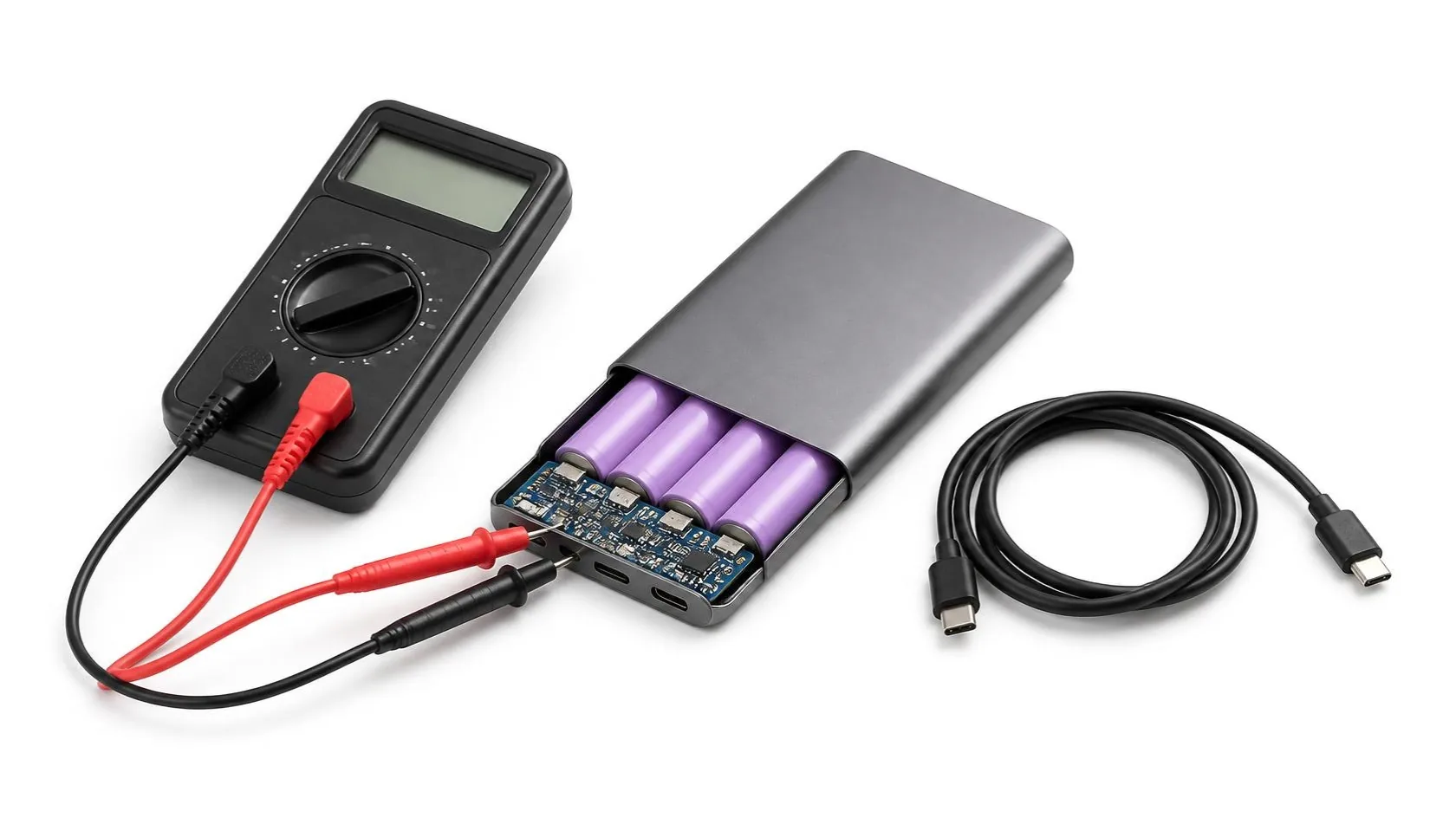
The power bank is no longer just an accessory, but a strategic energy asset subject to complex regulation.
To import and sell it legally in the European Union, compliance is not optional.
The new EU Battery Regulation, combined with the General Product Safety Regulation (GPSR), EMC, and RoHS directives, imposes stringent requirements on safety, sustainability, and design.
Ignoring this new paradigm is not an option: it means exposure to customs blocks, market recalls, and sanctions that can compromise an entire product line.

Why isn’t a power bank just an accessory anymore?
Understanding the new regulatory classification of power banks is a fundamental strategic step for every economic operator.
The European legislative framework has shifted attention from simple “end-of-life” management to a holistic “cradle-to-grave” approach.
This change extends the importer’s responsibility, who de facto assumes the manufacturer’s obligations, from the raw material supply chain to the device’s end-of-life management.
The Battery Regulation (EU) 2023/1542, acting as lex specialis, transforms the power bank into a device subject to sustainability, traceability, and design obligations that go far beyond simple electrical safety.
The new regulatory approach is based on three interconnected pillars:
- Sustainability and Due Diligence: Economic operators (excluding SMEs) are obliged to implement control systems to verify the origin of critical raw materials such as Cobalt, Lithium, Nickel, and Natural Graphite. They must ensure that sourcing does not come from conflict zones or supply chains that violate human rights.
- Safety and Performance: Compliance requires rigorous demonstration of the electrochemical safety of lithium cells and the fire resistance of the casing. Tests must validate protection against short circuits, overloads, and thermal abuse, known risks such as thermal runaway.
- Digital Labeling and Transparency: Starting in 2027, every power bank must feature a QR code. This digital tool will provide access to the “battery passport”, giving consumers and authorities crucial information on composition, capacity, durability, and correct disposal methods.
The complexity does not stop here. The compliance of a power bank depends on an intertwining of different regulations, each with specific requirements.
What are the essential CE regulations for a power bank?
CE marking for a power bank does not derive from the application of a single directive, but from compliance with a system of interconnected regulations. Neglecting even one of these legislative acts exposes the importer to a high risk of non-compliance, with consequences ranging from goods blockage to administrative sanctions.
Power bank CE marking requires simultaneous compliance with a set of regulations covering the battery lifecycle, general safety, electromagnetic compatibility, and chemical restrictions.
| Legislative Act | Main Obligation for a Power Bank |
|---|---|
| Regulation (EU) 2023/1542 (Batteries) | Lifecycle management, removability (2027), QR code (2027), chemical limits. |
| GPSR (EU) 2023/988 (General Product Safety) | Acts as a “safety net” and complementary reference to specific CE requirements. |
| EMC Directive 2014/30/EU | Controls emissions and immunity to electromagnetic disturbances of the DC/DC circuit. |
| RoHS Directive 2011/65/EU | Limits Lead (Pb) in PCB soldering and 9 other substances. |
| REACH Regulation 1907/2006 | Controls SVHCs such as Phthalates in ‘soft-touch’ coatings and Chlorinated Paraffins (SCCP) in USB cables, often a cause of market recalls. Always applicable regardless of CE marking. |
Operating at voltages below 75V DC, a power bank is excluded from the Low Voltage Directive (LVD).
A power bank must be equipped with an adequate technical file representative of the product actually manufactured… and not just of the golden sample:
- General description of the product
- Design and manufacturing drawings
- Schematics of components, sub-assemblies, and circuits along with descriptions and explanations
- Adequate risk analysis and assessment (including electrical, thermal, and chemical risk assessment)
- List of harmonized standards applied in full or in part
- Description of solutions adopted to meet essential requirements where harmonized standards have not been applied
- Bill of Materials (BoM) with detailed information on materials and critical safety components
- Test Reports
- Copy of the EU Declaration of Conformity
- EU type-examination certificates or quality system approvals (if a notified body was involved)
- Instruction manual and safety information (including warnings on operating temperatures and disposal)
- Labeling examples (CE marking placement, WEEE symbol, batch traceability, and manufacturer/importer data)
- Specific technical documentation for the Battery Regulation (e.g., data on nominal capacity, chemistry, and, if applicable, replaceability information)
What changes in design with the new rules in 2027?
The Battery Regulation will have a disruptive impact on the physical design of power banks.
The rules coming into force in 2027 are not a simple update, but a true revolution that will render most designs currently on the market obsolete.
Importers and distributors must prepare for a radical redesign of the products they intend to place on the market.
From February 18, 2027, power banks must have batteries that are easily removable and replaceable by the end-user and feature a QR code for access to product information.
The two most significant changes are:
-
Removability and Replaceability: Current designs, characterized by casings sealed with ultrasonic welding and internally glued battery packs, will become illegal.
- The regulation mandates that the end-user must be able to remove and replace the battery using common tools, without breaking the device. This requirement aims to promote the circular economy and reduce electronic waste.
- Future designs will have to rely on mechanical assemblies, such as screws or clips, avoiding gluing or other permanent solutions.
- QR Code and Transparency: The product’s physical label must include a QR code. By scanning it, the user can access a standardized data set including chemical composition, nominal capacity, production date, instructions for safe replacement, and correct disposal procedures. This requirement aims to increase transparency and promote the circular economy.
In practice, this means importers must start a technical dialogue with suppliers now to redesign production lines. Waiting further to adapt may not be enough to ensure supply continuity.
Frequently Asked Questions (FAQ)
What is the main risk for a power bank according to Safety Gate notifications?
Overheating with risk of fire (thermal runaway), caused by defects in the cell separator or protection circuits (BMS) lacking redundancy, is the most known danger. However, recalls due to chemical toxicity, such as Short-Chain Chlorinated Paraffins (SCCPs) used as plasticizers or low-cost flame retardants in the supplied USB cables, are sharply increasing and require specific laboratory tests.
Is the UN 38.3 test sufficient for CE marking?
Absolutely not. UN 38.3 is a mandatory test only for safety during transport (air, sea). CE marking requires separate tests and documentation to demonstrate compliance with GPSR (e.g., standard EN IEC 62368-1), EMC, RoHS, and the Battery Regulation.
My supplier gave me a “CE certificate”. Am I covered?
No. CE marking is a manufacturer’s self-declaration. The “certificate” often refers to a single test report. The importer is responsible for verifying the complete technical file to avoid the golden sample tactic (a perfect sample for tests, followed by mass production with substandard components) and to ensure it is not a “facade technical file” based on generic templates.
Do you need support for your product compliance?
Don’t let compliance become an obstacle.
I am also available for an informal, no-obligation conversation.