
CE Mark: the 6-step guide to safe importing
The CE marking is a mandatory declaration by which the manufacturer states that a product meets the EU’s safety, health and environmental protection requirements.
It acts as a “passport” for the free movement of goods within the European Economic Area (EEA), ensuring high standards and clear responsibilities for economic operators.
Managing it correctly is essential to market products in Europe without facing blocks or penalties.

What is CE marking and why does it matter?
Beyond being a legal requirement, CE marking is a fundamental strategic asset for any operator in the single market. Its benefits extend across the entire commercial supply chain, with tangible advantages for both sellers and buyers:
- For businesses: it drastically simplifies trade within the EEA. A CE-marked product can circulate freely in all member states without additional national tests or certifications, cutting costs and bureaucracy.
- For consumers: it provides a visible assurance that the purchased product is declared safe and complies with high standards, enabling more informed choices and building market trust.
Compliance management is not an isolated task; it’s a responsibility that extends along the whole supply chain.
Who is responsible for product compliance?
Product compliance is a shared duty involving the entire supply chain. Each economic operator plays a specific and crucial role in ensuring that only safe, compliant products reach the market. Understanding these responsibilities is key to avoiding disruptions, fines, and safety risks.
Manufacturer
The manufacturer is the primary actor and bears ultimate responsibility for product compliance. Key tasks include:
- Carrying out the conformity assessment, analysing product risks.
- Preparing and keeping the technical documentation proving compliance.
- Issuing the EU Declaration of Conformity, the legal document attesting compliance with all applicable legislation.
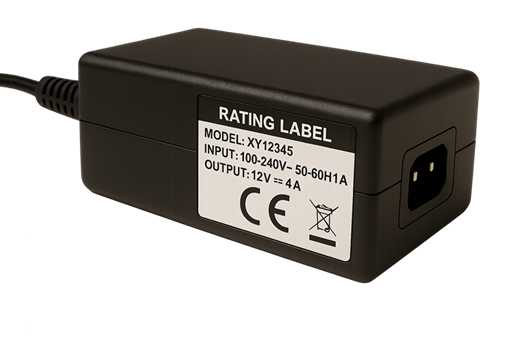
- Physically affixing the CE marking to the product in a visible, legible and indelible way.
Importer
The importer bridges non-EU manufacturers and the EU market. Their role is crucial to ensure imported products meet EU standards. Duties include:
- Verifying that the non-EU manufacturer has correctly performed the conformity assessment and can be contacted at any time.
- Ensuring the technical documentation and the EU Declaration of Conformity are complete and available.
- Adding the importer’s name and address on the product or packaging for traceability.
Distributor
The distributor must act with due diligence to avoid compromising product compliance. They must also:
- Know which products must bear the CE marking and which documents must accompany them, checking their presence.
- Be able to identify and report products that are clearly non-compliant.
- Cooperate with market surveillance authorities by providing all information needed to trace the product’s origin.
Consumer
The consumer also plays an active role. Although they have no legal obligations, they can contribute to market safety by purchasing from reliable sources, carefully reading warnings and instructions for use, and reporting any safety issues to the manufacturer or competent authorities.
How to obtain CE marking: the 6-step process
Affixing the CE marking is not a mere formality but a structured technical and documentary process the manufacturer must complete to ensure product safety before placing it on the market. Following these steps carefully is the only way to ensure legal compliance.
-
Identify the applicable directives and regulations
First, identify all relevant EU legislation (directives and regulations) and harmonised standards for the specific product category.
-
Check the product’s specific requirements
Once the applicable legislation is identified, examine in detail the essential requirements for safety, health and environmental protection that the product must meet. Multiple EU acts may apply to the same product.
-
Determine whether a notified body is required
For higher-risk products, a conformity assessment by a notified body may be required. These are independent entities designated by national authorities that verify product compliance. The list of notified bodies is available in the NANDO (New Approach Notified and Designated Organisations) database. Only after a positive assessment can the manufacturer affix the CE marking.
-
Test the product and assess conformity
The product must undergo tests and checks to verify conformity with essential requirements. This may include laboratory tests, design analysis and assessment of the manufacturer’s quality management system. Results must show the product is safe and reliable.
-
Prepare and retain the required technical documentation
The manufacturer must prepare detailed technical documentation proving product compliance with the applicable requirements. It must be kept for at least 10 years from the date the product is placed on the market and be available to market surveillance authorities on request.
-
Affix the CE marking and issue the EU Declaration of Conformity
After completing the previous steps, the manufacturer can affix the CE marking to the product (or to its packaging/accompanying documentation if the nature of the product does not allow it). The CE marking must be visible, legible and indelible, proportionate in size and not smaller than 5 mm.

At the same time, the manufacturer must draw up the EU Declaration of Conformity, a legal document by which they declare, under their sole responsibility, that the product complies with all applicable EU legislation.
Conformity assessment and the role of harmonised standards
Conformity assessment is the technical core of the CE-marking process. It consists of procedures, analyses and tests through which the manufacturer objectively demonstrates that the product meets all legal requirements of the applicable directives.
The process can be greatly streamlined by using harmonised standards, which offer a recognised technical path, and for higher-risk products it requires the involvement of a notified body for independent verification.
This covers both the design and production phases. Ultimate responsibility always lies with the manufacturer, even when parts of the process are outsourced.
The benefit of the “presumption of conformity”
The EU has developed harmonised standards to make this task easier. These are detailed technical standards created by European standardisation bodies (such as CEN and CENELEC) on a mandate from the European Commission.
Although their use is voluntary, applying a harmonised standard gives the product a “presumption of conformity” with the essential requirements of the corresponding directive.
In other words, by following a harmonised standard, the manufacturer has a clear and recognised pathway to demonstrate compliance.
Which products require CE marking?
The CE-marking obligation is not universal; it applies to specific product categories defined by EU directives and regulations. It is crucial for importers and manufacturers to correctly determine whether their goods fall into one of these categories.
| Reference legislation | Type of products covered | Examples |
|---|---|---|
| Directive 2014/35/EU (LVD) | Low-voltage electrical equipment. | Washing machines, refrigerators, hair dryers, lamps, drills. |
| Directive 2014/30/EU (EMC) | Electrical and electronic equipment. | Radios, TVs, smartphones, household appliances with electronics. |
| Directive 2011/65/EU (RoHS) | Electrical and electronic equipment (restriction of hazardous substances). | Electronic components, cables, smartphones, TVs, LED bulbs. |
| Directive 2009/48/EC (Toys) | Products intended for play by children under 14. | Dolls, board games, plush toys, electronic toys for children. |
| Directive 2014/53/EU (RED) | Equipment that emits/receives radio waves. | Smartphones, Wi-Fi/Bluetooth devices (headphones, speakers), drones. |
| Directive 2006/42/EC (Machinery) | Machinery, interchangeable equipment and safety components. | Garden machinery, power tools. |
| Directive 2013/29/EU (Pyrotechnic Articles) | Fireworks and other pyrotechnic articles. | Small-category fireworks sold to the public. |
| Regulation (EU) 2016/425 (PPE) | Personal Protective Equipment. | Gardening gloves, sunglasses, sports knee pads. |
| Regulation (EU) 2017/745 (MDR) | Medical devices for human use. | Digital thermometers, plasters, some blood pressure monitors. |
| Directive 2014/68/EU (PED) | Pressure equipment with maximum pressure > 0.5 bar. | Pressure espresso makers, pressure cookers. |
| Directive 2009/125/EC (Ecodesign) | Energy-related products with eco-design requirements. | Refrigerators, washing machines, TVs, vacuum cleaners. |
| Regulation (EU) 305/2011 (CPR) | Products to be incorporated in construction works. | Doors, windows, insulation materials, gates. |
| Regulation (EU) 2019/1009 (FPR) | EU fertilising products such as fertilisers and soil improvers. | Houseplant fertilisers, potting soils with specific additives. |
| Regulation (EU) 2023/1542 | Batteries. | General-purpose batteries. Examples: 4.5 V (3R12), button cells, D, C, AA, AAA, AAAA, A23, 9 V (PP3). |
Warning: not all products require CE Marking!
Affixing the CE Marking to products for which it is not required (e.g., furniture, textiles, cutlery) is a severely punishable offence.
Verify examples of excluded categories and the consequences of misuse now.
Do you need support for your product compliance?
Don’t let CE Marking become an obstacle.
I am also available for an informal and non-binding conversation.