Italian Legislative Decree 211/2026 on defective products: new rules from 9 December 2026

Italian Legislative Decree 211/2026 transposes Directive (EU) 2024/2853 on liability for defective products into Italian law. It rewrites the rules of the Italian Consumer Code that determine who compensates the damage caused by a defective product. The new rules apply to products placed on the market or put into service from 9 December 2026.
Legislative Decree 211/2026 extends liability to software. For products manufactured outside the Union, the authorised representative and the fulfilment service provider are now liable alongside the importer. The rules on evidence in court and on compensable damage also change.
- Law
- Legislative Decree No 211 of 6 November 2026which replaces Articles 114 to 127 of the Italian Consumer Code
- In force from
- 6 December 2026
- Applies to products
- Placed on the market or put into service from 9 December 2026
- Products placed earlier
- Remain subject to the previous rules
- Nature
- Civil liability towards the natural person who suffers the damagewhich does not depend on the operator’s fault

What changes with Legislative Decree 211/2026?
Legislative Decree 211/2026 updates rules that date back to 1988 and were written for physical products, and adapts them to connected products, software and online sales. Liability remains strict, meaning that a person injured by a defective product does not have to prove the fault of whoever manufactured or imported it. The injured person must prove the defect, the damage and the causal link between them.
Compared with the previous text of the Consumer Code, the main changes are the following:
- The notion of product includes software and digital manufacturing files. It also names raw materials expressly
- The “producer” becomes the “economic operator”. In addition to the manufacturer and the importer, the authorised representative and the fulfilment service provider are also liable
- A distributor that does not identify its supplier becomes liable one month after the request, no longer after three months. The same rule applies to certain online platforms
- The court may order the party sued to disclose evidence. In some cases defectiveness is presumed
- The €387 threshold on damage to property no longer applies. Destroyed or corrupted data are also compensated
- The ten-year expiry period becomes twenty-five years for injuries that appear late
When do the new rules apply?
The new rules apply to products placed on the market or put into service from 9 December 2026. The decree enters into force on 6 December 2026, but the date on which each product is placed on the market decides which regime applies.
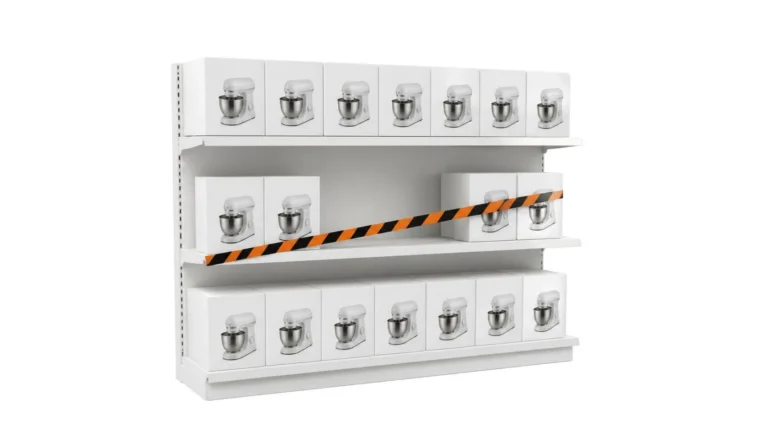
Products placed on the market or put into service before 9 December 2026 remain subject to the previous rules. The same product model can therefore fall under two different regimes, depending on the date on which the individual item was placed on the market. For importers and manufacturers, the date on which products are placed on the market becomes a fact they need to be able to prove.
Which products fall under Legislative Decree 211/2026?
Under Legislative Decree 211/2026, a product is any movable, even if integrated into or inter-connected with another item. The previous definition covered movables, even if incorporated into another item, as well as electricity. Products now also include:
- Software, whether embedded in a product or supplied on its own
- Digital manufacturing files, that is digital models containing the instructions to produce an item with automatically controlled machines, such as 3D printers
- Raw materials, which the previous text already covered through their producer
- Electricity, as before
Free and open-source software developed or supplied outside the course of a commercial activity is excluded. Related services, that is digital services integrated into or inter-connected with the product without which it cannot perform one or more of its functions, are also components of the product.
Who is liable for the damage?
The manufacturer of the product is liable for the damage, including for a defective component integrated into it within its control. The manufacturer of a defective component is also liable, if the component was integrated or inter-connected within the control of the product manufacturer and caused the product to be defective.
For products manufactured outside the Union the chain becomes longer. If the manufacturer is established outside the Union, the following are liable in addition to the manufacturer:
- The importer of the defective product or component
- The manufacturer’s authorised representative
- The fulfilment service provider, where there is no importer established in the Union or authorised representative
An importer that sells under its own brand is liable as a manufacturer, because anyone who affixes their name or trademark to a product presents themselves as the manufacturer. Anyone who substantially modifies a product outside the original manufacturer’s control and then makes it available on the market or puts it into service is considered a manufacturer.
Distributors and online platforms
A distributor is liable only on a subsidiary basis. Where no liable operator established in the Union can be identified, the injured person may ask the distributor in writing to identify the liable operator or the party that supplied it with the product. The request states the product, the place and the approximate date of purchase. If the distributor does not reply within one month, it becomes liable itself.
The same rule applies to the provider of an online platform that allows consumers to conclude distance contracts with traders. It applies where the conditions of Article 6(3) of Regulation (EU) 2022/2065 on digital services (Digital Services Act, DSA) are met. These are cases where the platform presents the product or the transaction in a way that leads an average consumer to believe that the product is provided by the platform itself. The same applies if the consumer may believe that it is provided by a trader acting under the platform’s authority or control.
When is a product considered defective?
A product is defective if it does not provide the safety that a consumer is entitled to expect or that is required under Union or Italian law. All circumstances are taken into account in this assessment, including:
- The presentation and characteristics of the product, including labelling, design, packaging and instructions
- Reasonably foreseeable use
- The effect on the product of its ability to continue to learn or acquire new features after it has been placed on the market
- The effect on the product of other products that can be expected to be used together with it, including by means of inter-connection
- Relevant safety requirements, including safety-relevant cybersecurity requirements
- Recalls and any other intervention by an authority or an economic operator relating to product safety
A product is not considered defective solely because a better product, or an update of it, is placed on the market. A product from the same production series as another product already found to be defective is instead presumed defective, unless proven otherwise.
How does evidence in court change?
The injured person still has to prove the defect, the damage and the causal link between them. Legislative Decree 211/2026, however, gives the injured person two new tools.
The first is the disclosure of evidence. Where the injured person presents facts and evidence sufficient to support the plausibility of the claim, the court orders the defendant, on request, to disclose the relevant evidence at its disposal. The order is limited to what is necessary and proportionate. The court also protects trade secrets. The same applies the other way round, in favour of the defendant.
The second is presumptions. Defectiveness is presumed, unless proven otherwise, where:
- The defendant fails to disclose the evidence that the court ordered it to disclose
- The injured person demonstrates that the product does not comply with mandatory product safety requirements, under Union or Italian law, intended to protect against the very risk of the damage suffered
- The injured person demonstrates that the damage was caused by an obvious malfunction during reasonably foreseeable use or under ordinary circumstances
The causal link between defect and damage is presumed where the product is defective and the damage is of a kind typically consistent with that defect. Defectiveness, the causal link or both are also presumed where, despite the disclosure of evidence, the injured person faces excessive difficulties, in particular due to technical or scientific complexity. The injured person must, however, demonstrate that the defect, the causal link or both are likely. These presumptions can also be rebutted.
Technical documentation showing that the product complies with safety requirements, for example those of the General Product Safety Regulation (GPSR), also helps in defending a civil claim.
Software and updates
For software and updates, one of the grounds that exclude liability changes, namely proof that the defect probably did not exist when the product was placed on the market or put into service. This proof is not enough if the product is within the manufacturer’s control and the defect is due to a related service, to software, including updates and upgrades, or to a substantial modification. The same applies if the software updates necessary to maintain safety are lacking.
Which damage is compensated?
Legislative Decree 211/2026 considers the following damage compensable:
- Death and personal injury, including damage to psychological health, that can be established by a medico-legal assessment
- Damage to or destruction of property. Excluded are the defective product itself, a product damaged by a defective component integrated into it by the manufacturer or within its control, and property used exclusively for professional purposes
- Destruction or corruption of data not used for professional purposes, including the costs of recovering or restoring them
The previous text compensated damage to property only for the part exceeding €387. The new text no longer provides for this threshold. Any agreement that excludes or limits liability towards the injured person remains void.
By when can compensation be claimed?
The right to compensation is subject to a three-year limitation period. The period runs from the day on which the injured person became aware, or should reasonably have become aware, of the damage, the defect and the identity of the liable operator.
The right expires in any case ten years after the product was placed on the market or put into service, unless the injured person has already initiated proceedings. For a substantially modified product, the ten years run from when it was made available after the modification. The period is extended to twenty-five years where the injured person could not act earlier because of the latency of a personal injury.
Frequently asked questions (FAQ)
Does Legislative Decree 211/2026 apply to products already placed on the market?
No. The new rules apply to products placed on the market or put into service from 9 December 2026. Products placed on the market earlier remain subject to the previous rules of the Consumer Code.
Is an importer selling under its own brand liable like the manufacturer?
Yes. Anyone who affixes their name or trademark to a product presents themselves as the manufacturer and is liable as such. Even without its own brand, the importer is liable if the manufacturer is established outside the Union.
Does the decree provide for administrative penalties?
No. Legislative Decree 211/2026 governs civil liability towards the person who suffers the damage. Penalties for product safety remain those of the respective rules, such as those provided by the Italian Consumer Code for the General Product Safety Regulation.
Can a contract with the supplier limit liability towards the consumer?
No. Any agreement that excludes or limits liability towards the injured person is void. Between economic operators, however, the right of recourse and the sharing of the damage according to each one’s risk and fault still apply.
Do you need support for your product compliance?
Don’t let compliance become an obstacle.
I am also available for an informal, no-obligation conversation.