Greenwashing and Batteries: new Italian decrees for the green transition
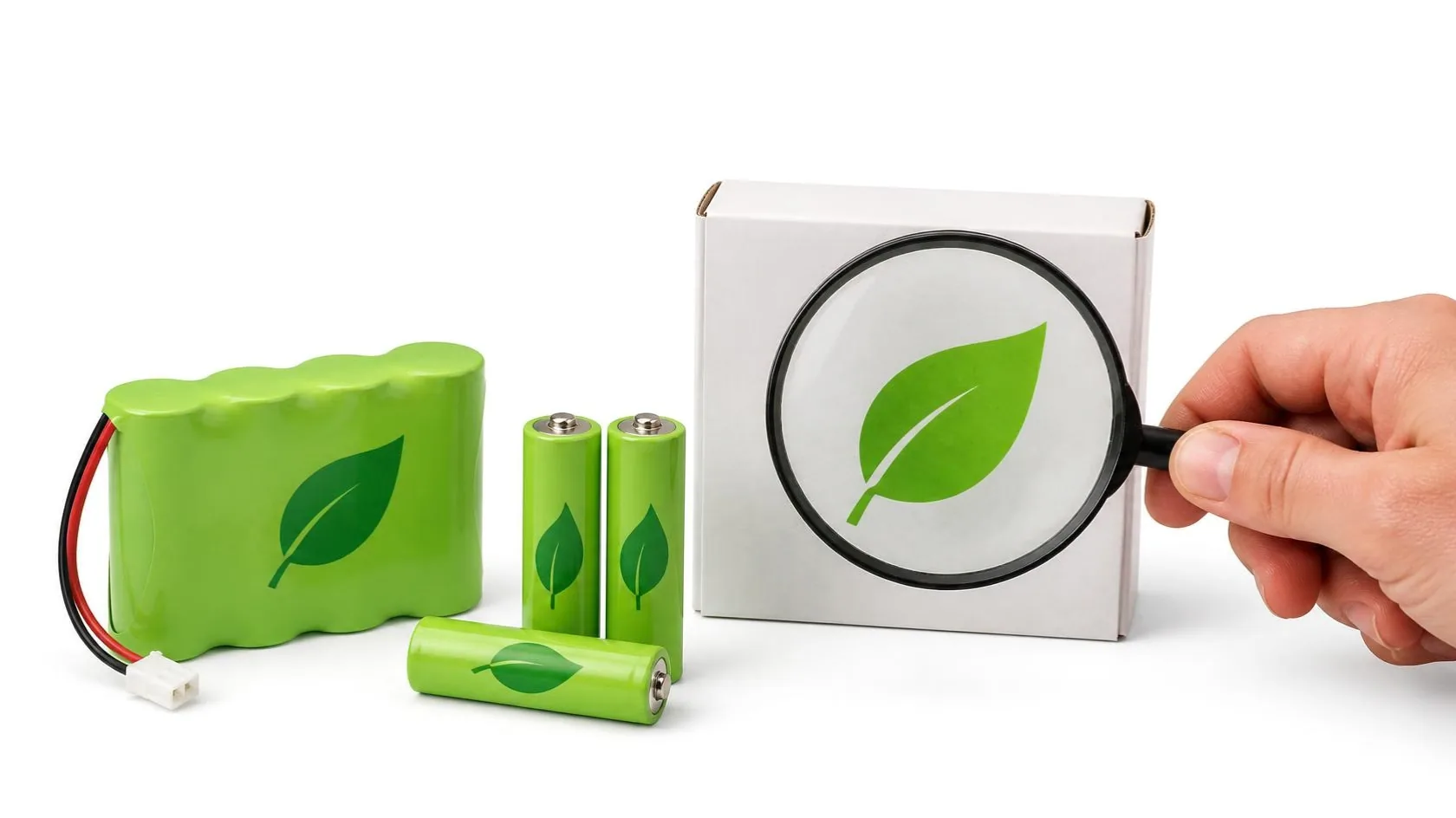
The Italian Government has initiated the implementation of two crucial EU regulations.
The first, Directive (EU) 2024/825, tackles greenwashing and premature obsolescence to protect consumers with more transparent and verified information.
The second, Regulation (EU) 2023/1542, introduces obligations for the entire life cycle of batteries, from design to recycling.
Both regulations have a direct impact on labeling, product compliance, and producer responsibility, requiring immediate action from companies.

Update: Legislative Decree 30/2026 applies from 27 September 2026. The new rules on environmental claims are described in the news article Environmental claims: obligations from 27 September 2026.
Green Transition Directive: A Stop to Greenwashing and Premature Obsolescence
The growing consumer focus on sustainability has led to a proliferation of environmental claims that are often generic and unverified. For importers and manufacturers, this is not just a regulation on advertising: it is a redefinition of market access rules. Ignoring it is not a strategic option, but a decision that leads to direct operational consequences: penalties, market blockages, and reputational damage.
These regulations are not isolated events but represent two sides of the same coin in the new European strategy: on one hand, they impose absolute transparency in consumer claims (the fight against greenwashing); on the other, they demand concrete responsibility along the entire value chain (the battery life cycle).
What Does Directive (EU) 2024/825 Introduce?
The implementing legislative decree aims to empower consumers and promote a cleaner, more circular economy. The intervention is designed to strengthen consumer rights, improve information transparency, and encourage more informed and sustainable purchasing choices.
- Combating Greenwashing: The rule explicitly sanctions generic, unfounded, or unproven environmental claims. This includes any commercial practice that induces a purchase through misleading information about a product’s sustainability.
- Fighting Premature Obsolescence: A new harmonised label is introduced, which must clearly and standardly communicate the commercial durability guarantee offered by the manufacturer.
- Enhanced Consumer Protection: More transparency and greater protection from unfair commercial practices.
What Is the Impact for Importers and Manufacturers?
The implications are immediate and concrete. Any claim like “eco-friendly” or “sustainable” on packaging, without objective certification, is no longer a marketing inaccuracy but a direct violation of the law. This exposes the company to immediate penalties and product withdrawal from the market.
Importing and manufacturing companies must consider a strategic review of their entire product communication.
In parallel, the new harmonised label on durability introduces an additional informational compliance requirement to be implemented and managed.
Battery Regulation (EU) 2023/1542: New Responsibilities Along the Life Cycle
Batteries are a central component of the energy and digital transition. Because of this strategic role, the regulation goes beyond simple waste management. It creates a comprehensive compliance framework covering every stage, from raw material sourcing to design and recycling, imposing new burdens and due diligence obligations on the entire supply chain.
What Are the Obligations for Economic Operators?
The national legislative decree for adaptation introduces a regulatory framework that governs the entire life cycle of batteries.
- Regulation of the Entire Life Cycle: The rules cover every phase, from sustainable design to waste management, imposing specific requirements for each stage.
- Due Diligence: An obligation to ensure sustainable sourcing of raw materials, requiring active mapping and control of the supply chain.
- Compliance and Traceability: Specific obligations to demonstrate compliance and ensure full traceability of batteries placed on the market.
- Extended Producer Responsibility (EPR): The system is completely redefined with the establishment of the Register of Battery Producers and the Coordination Center, with membership options that can be individual or collective.
Link to the Government’s press release (in Italian):
https://www.governo.it/it/articolo/comunicato-stampa-del-consiglio-dei-ministri-n-148/30216.