Guide to EU Regulation 2025/2052: new ecodesign rules for power supplies and battery chargers
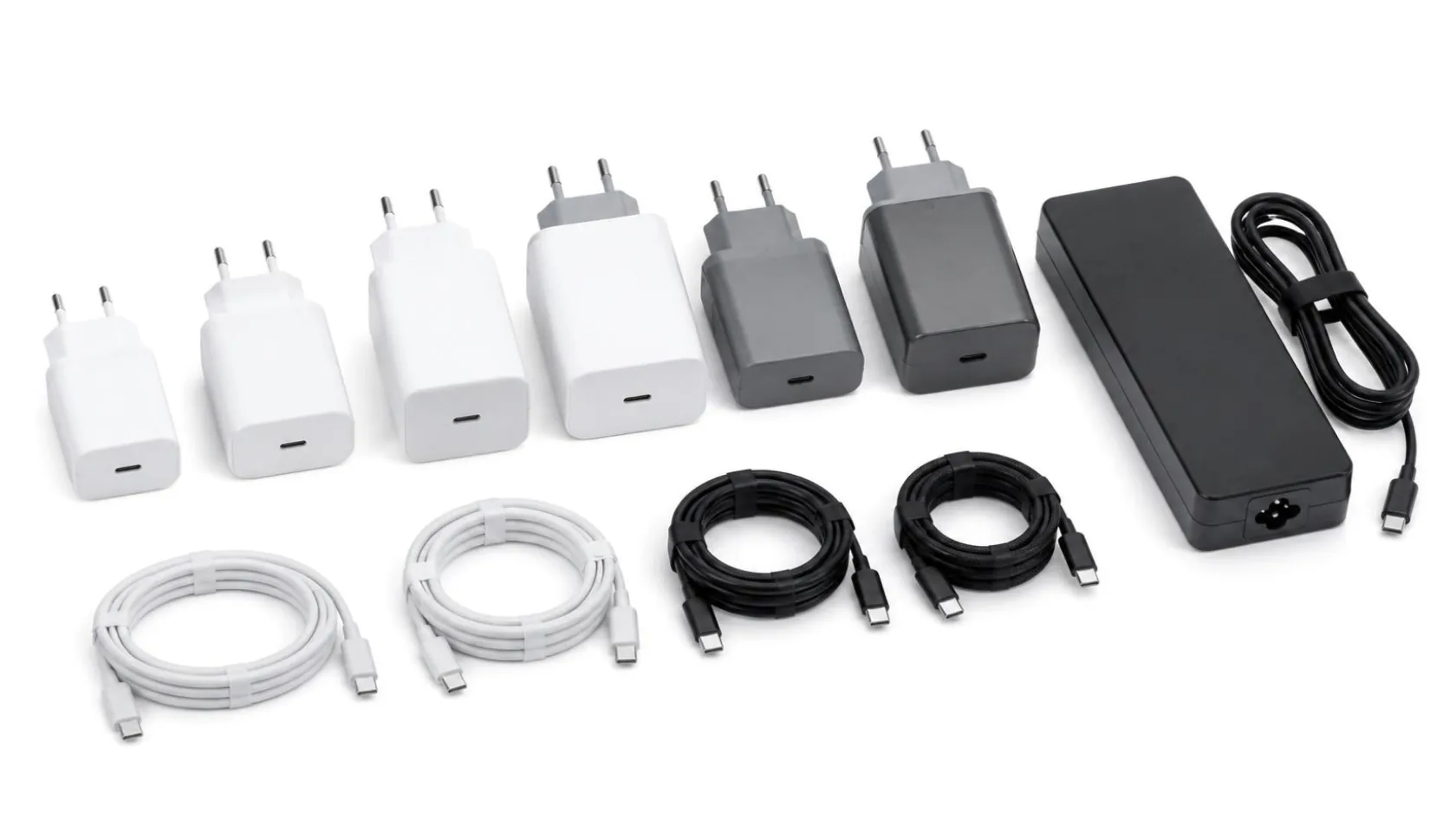
The new EU Regulation 2025/2052 “Power Supply Compliance” introduces a strategic revision of ecodesign standards, aiming to reduce electronic waste and increase energy efficiency.
For those placing electronic products on the European Union market, three fundamental aspects are changing:
- Mandatory interoperability via USB-C
- Stricter energy efficiency requirements (including low load)
- New durability criteria.

Why is USB Type-C interoperability becoming the Ecodesign standard?
The harmonization of charging systems, in line with the Green Deal and coordinated with the RED Directive, aims for a sustainable single market that is simplified for consumers.
The regulation mandates compatibility with USB Power Delivery (USB-PD) specifications for most power supplies up to 240W, creating a common charging ecosystem and reducing market fragmentation.
Key Requirements:
- Standard Connector: Mandatory inclusion of at least one USB Type-C socket on external power supplies (EPS).
- Detachable Cables: Ban on fixed cables (“captive cables”) to encourage independent replacement and reduce waste.
- USB-PD Protocol: Necessary to ensure secure communication and optimal power delivery.
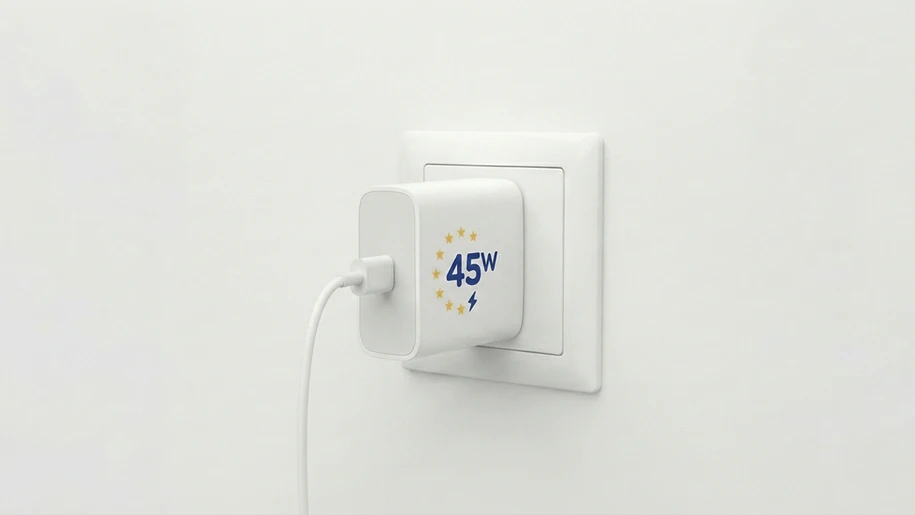
Logo “Common Charger”
A specific EU logo is introduced to be affixed to both the power supply label and the product packaging. This symbol will clearly and immediately inform consumers about the charger’s compatibility and performance.

Where the height (A) is at least 5 mm if the logo is affixed to the nameplate or 7 mm if affixed to the casing, packaging, or instruction manual. If the logo is enlarged, the drawing proportions are maintained;
«XX» is replaced by the value of the maximum rated output power delivered by a single USB Type-C or USB-PD port. For dynamic external power supplies, this value is the guaranteed output power.
If the logo is placed on a dark background, the following graphic can be used by replacing the blue color with the dark background color:
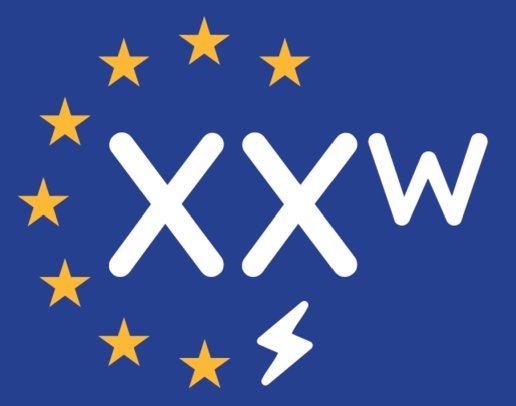
The following black and white graphic forms or other similar monochromatic forms may be used if the nameplate, casing, packaging, or product instruction manual uses these colors exclusively:

Main Exemptions
Not all devices are subject to these obligations. For technical, safety, or sector-specific standard reasons, some product categories are exempted from interoperability requirements:
- Appliances intended for use in wet environments (e.g., IPX4 toothbrushes).
- Toys, which must comply with dedicated safety standards.
- Audio equipment not powered by battery.
- Products with high electrostatic discharge (ESD) protection requirements (e.g., vacuum cleaners).
- Devices requiring peak power exceeding 240W.
What are the new efficiency requirements for low load and wireless chargers?
The legislation addresses previous gaps by focusing on real-world usage conditions and emerging technologies:
- Low Load Efficiency (10%): A minimum efficiency requirement at 10% load is introduced for power supplies >10W, crucial for devices often in low activity states.
- Wireless Stand-by Limits: A cap on the energy consumption of charging pads when not actively charging, to eliminate “phantom consumption”.
- Active Average Efficiency: Existing limits for average active efficiency and no-load consumption are tightened to eliminate the poorest performing power supplies from the market.
Ecodesign Compliance 2025/2052: which new products are included and what durability requirements apply?
The regulation extends its scope to:
- Wireless chargers and related charging pads.
- Charging devices for single-cell batteries (e.g., for AA/AAA batteries).
- Active “Power-over-Ethernet” (PoE) injectors.
- Separately sold USB power supplies (stand-alone).
A durability requirement is introduced: power supplies must be designed to ensure a reference service life of 10 years at maximum output power.
Energy efficiency supports this goal by reducing thermal stress on components.
Timeline
- December 14, 2028: Date of full application of the new Regulation. From this day, new products placed on the market must be compliant.
- December 14, 2028: Repeal of Regulation (EU) 2019/1782.
- Until December 14, 2033: Placing power supplies on the market as ‘spare parts’ for previous products is permitted, provided they comply with the old regulation.
- From December 14, 2025: Products already compliant with the new Regulation (EU) 2025/2052 will be considered automatically compliant with the old one as well.
Frequently Asked Questions (FAQ)
Does the new regulation oblige me to sell products without a power supply?
No, unbundling (selling without a charger) is not a general obligation of this regulation. However, interoperability facilitates this practice, and the RED Directive already mandates offering the option to purchase radio products without a charger for specific categories.
Are power supplies for my garden power tools subject to the new rules?
No, power supplies for power tools and garden machinery are among the categories exempted from USB-C interoperability requirements due to specific robustness, safety, and non-standard operating condition needs.
What is the estimated impact on the production costs of a power supply?
The unit cost impact increases marginally to integrate more efficient and durable components. For consumers, an initial increase in the purchase price of interoperable products is expected, but this is compensated over the lifecycle by reducing the purchase of replacement power supplies and logistical savings from potential unbundling.
Do you need support for your product compliance?
I am available for an informal and non-binding conversation.