Environmental claims: obligations from 27 September 2026 (Legislative Decree 30/2026)
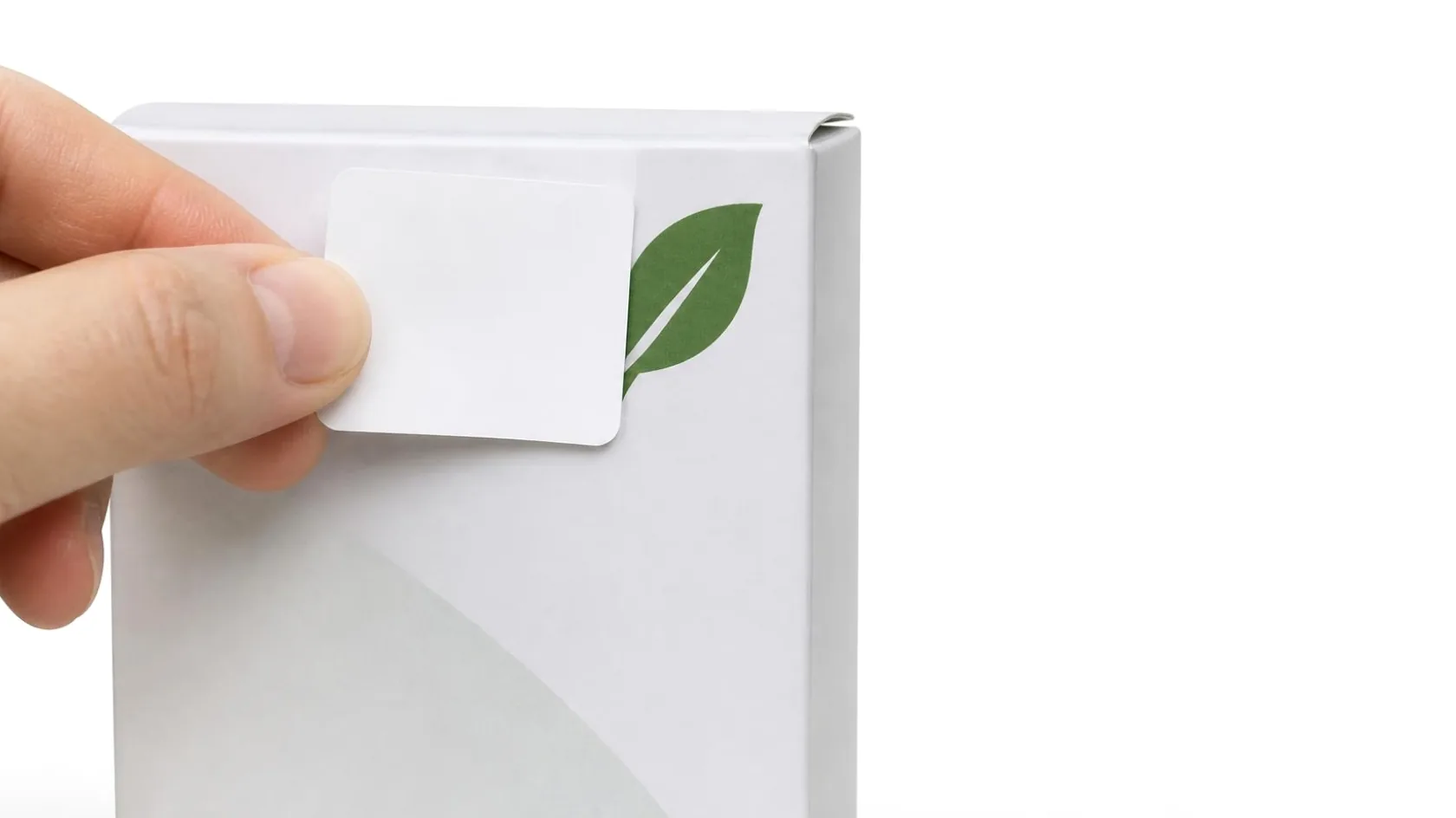
From 27 September 2026, environmental claims addressed to consumers are subject to stricter rules. Legislative Decree 30/2026 transposes Directive (EU) 2024/825 and amends the Italian Consumer Code. From that date, generic environmental claims without recognised excellent environmental performance are banned in all circumstances. The same applies to sustainability labels that are neither certified nor established by public authorities, and to claims of climate neutrality based on the offsetting of emissions.
The rules also apply to products already manufactured or already on the shelves, because there is no transition period. For the packaging of durable goods only, the circular of the Italian Ministry of Enterprises and Made in Italy (MIMIT) gives an indicative period of six months for the adjustment, if the company proves the date of manufacture or of placing on the market. From 27 September 2026, reasonable and proportionate corrective measures are required in any case.
- Applies from
- 27 September 2026
- Law
- Legislative Decree 30/2026which amends the Italian Consumer Code
- Old stock
- No transition periodFor the packaging of durable goods, the MIMIT circular gives an indicative period of six months
- Penalties
- €5,000 to €10,000,000imposed by the Italian Competition Authority (AGCM)

What changes for environmental claims from 27 September 2026?
From 27 September 2026, every company that communicates with consumers must follow more precise rules when it presents an environmental benefit of its product. Environmental claims, often also called green claims, are governed by the Italian Consumer Code in the part on unfair commercial practices. Legislative Decree 30/2026 updates that part and applies from that date.
For environmental claims, the decree makes changes in four areas:
- new definitions, including environmental claim, generic environmental claim, sustainability label and certification scheme
- five new practices considered misleading in all circumstances, on environmental claims, sustainability labels and legal requirements presented as an advantage
- new misleading actions to be assessed case by case, such as future environmental commitments without a verifiable plan
- new information considered material when a company offers a service comparing products on environmental or social characteristics or on circularity aspects
The decree also adds other practices banned in all circumstances, concerning durability, reparability and software updates. In addition, it introduces new information obligations on the legal guarantee. The harmonised notice on the legal guarantee and the label of the commercial guarantee of durability are described on the page dedicated to the legal and commercial guarantee.
The text of the decree was previewed in November 2025, at the time of its preliminary examination by the Council of Ministers, in the article Greenwashing and Batteries: new Italian decrees for the green transition.
What is an environmental claim?
The Italian Consumer Code defines an environmental claim in the same terms as the Directive:
“any message or representation which is not mandatory under Union or national law, in any form, including text, pictorial, graphic or symbolic representation, such as labels, brand names, company names or product names, in the context of a commercial communication, and which states or implies that a product, product category, brand or trader has a positive or zero impact on the environment or is less damaging to the environment than other products, product categories, brands or traders, or has improved its impact over time”
The definition is broad and covers both explicit and implicit messages. A text on the packaging, a symbol, the product name or the brand can therefore be an environmental claim, if it communicates a benefit for the environment.
For brands and product names, the assessment is made case by case. Terms such as “eco”, “green” or “natural” can be an environmental claim when, in context, they lead the average consumer to associate the product with an environmental benefit. Trade mark registration does not exclude the application of the rules.
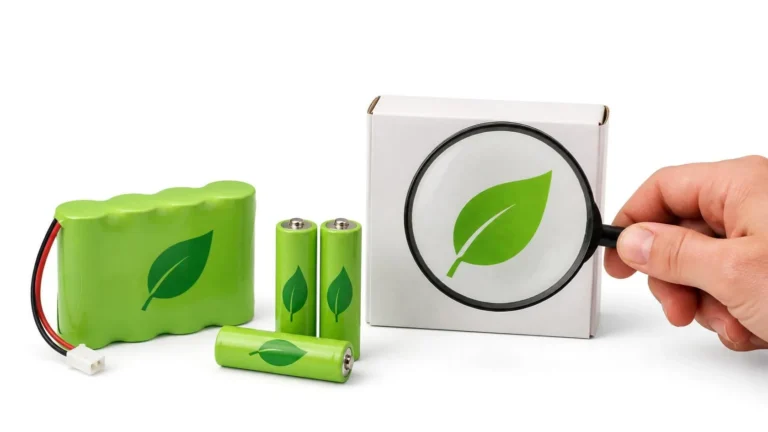
Images and colours, such as leaves, water drops or green backgrounds, can convey an implicit environmental message. On their own they are not a generic claim, which by definition is written or oral. Combined with text or a logo, however, they can fall under the rules on generic environmental claims or on sustainability labels.
Information required by law falls outside the definition, because the definition only covers messages that are not mandatory.
Which environmental claims are banned in all circumstances?
Among the practices that the decree adds to the list of those considered misleading in all circumstances, five concern environmental claims, sustainability labels and legal requirements presented as an advantage. For these practices there is no need to prove the effect on the consumer’s decision, because the practice alone is enough for the ban to apply.
| Banned practice | Example | When it is still allowed |
|---|---|---|
| Displaying a sustainability label that is not based on a certification scheme and not established by public authorities | A “sustainable product” badge created by the company without third-party verification | The label is certified by a compliant scheme or established by a public authority |
| Making a generic environmental claim without being able to demonstrate recognised excellent environmental performance relevant to the claim | “Ecological”, “green”, “environmentally friendly” without further explanation | The company demonstrates the relevant recognised excellent environmental performance, for example with the EU Ecolabel, or specifies the claim on the same medium |
| Making a claim about the product as a whole or the whole business when it concerns only one aspect | “Recycled product” when only the packaging contains recycled material | The claim states the aspect it refers to |
| Claiming, based on the offsetting of emissions, that the product has a neutral, reduced or positive impact in terms of greenhouse gases | “CO2 neutral” because the company buys carbon credits | The claim is based on the actual life-cycle impact of the product, within its value chain |
| Presenting a requirement imposed by law on all products of the category as a distinctive feature | “RoHS Compliant” as an advantage of the product | Never, if the obligation applies to all products of the category. A feature that goes beyond the obligation can be communicated instead, for example the absence of a substance that the law does not ban |
The ban can also concern chemical restrictions, for example when compliance with a restriction of the REACH Regulation that applies to all products of the category is presented as an advantage.
When is a generic environmental claim still allowed?
The Italian Consumer Code defines a generic environmental claim in the same terms as the Directive:
“any environmental claim made in written or oral form, including through audiovisual media, that is not included on a sustainability label and where the specification of the claim is not provided in clear and prominent terms on the same medium”
A generic environmental claim is allowed only if the company can demonstrate recognised excellent environmental performance relevant to the claim, that is with the EU Ecolabel, with a type I ecolabel officially recognised in the Member States or with the top performance set by other Union law. If, instead, the specification appears in clear and prominent terms on the same medium, the claim is no longer generic.

The excellence must concern the very aspect claimed. “Energy efficient” can be based on energy labelling. “Biodegradable” cannot be based on the EU Ecolabel, if the Ecolabel criteria for the product group contain no requirements on biodegradability.
Example: “climate-friendly packaging” is a generic claim. “100% of the energy used to produce this packaging comes from renewable sources” is a specific claim, which must still be true and demonstrable.
When space is limited, for example on a small package or on a poster, the specification must be close to the main claim, so that the consumer understands the link. If there is not enough space to specify it, the claim should generally not be made.
What is needed to display a sustainability label?
The Italian Consumer Code defines a sustainability label in the same terms as the Directive:
“any voluntary trust mark, quality mark or equivalent, either public or private, that aims to set apart and promote a product, a process or a business by reference to its environmental or social characteristics, or both, and excludes any mandatory label required under Union or national law”
From 27 September 2026, only a label established by public authorities or based on a certification scheme can be displayed. The certification scheme must have publicly available terms, including its requirements, and meet four criteria:
- it is open, under transparent, fair and non-discriminatory terms, to all traders willing and able to comply with its requirements
- its requirements are developed by the scheme owner in consultation with experts and stakeholders
- it sets out procedures for non-compliance, with withdrawal or suspension of the label
- compliance monitoring follows an objective procedure and is carried out by a third party whose competence and independence, from both the scheme owner and the trader, are based on international, Union or national standards and procedures
According to the European Commission’s questions and answers (non-binding guidance), the scheme owner and the third party that monitors compliance must be two separate legal entities. The Commission also considers that sustainability labels established by public authorities of third countries are allowed only if based on a certification scheme.
It adds that the Directive provides no transition period for labels after 27 September 2026. Schemes that do not meet the requirements must be adapted. Otherwise, the related labels must be removed from commercial communications.
Which rules apply to climate claims and future commitments?
A product cannot be presented as “climate neutral”, “climate compensated” or “reduced climate impact” if the result depends on the offsetting of emissions. This is the case with carbon credits purchased from projects outside the product’s value chain.
The ban does not cover environmental claims based on the actual footprint of the product over its life cycle, which must be substantiated by a life cycle assessment. It is also allowed to state a “reduced CO2 impact”, if the specification appears on the same medium and the result derives from actual improvements in production processes.
The ban concerns claims about the product. Environmental claims based on offsetting at company level are not covered by this ban, but remain subject to the general rules on misleading practices. The company can communicate its investments in environmental projects, including carbon credits, if it does so transparently and without misleading consumers.
Environmental claims about future performance, such as the goal of reaching zero emissions by a certain date, can be considered misleading, following a case-by-case assessment, if they are not based on clear, objective, publicly available and verifiable commitments. They require:
- a detailed and realistic implementation plan, with measurable targets and precise deadlines
- the resources allocated to implement it
- regular verification by an independent third party, with findings made available to consumers
According to the European Commission, the plan and the findings can also be made accessible through a QR code on the packaging, linking to the company’s website.
What happens to products already in stock?
The new rules also apply to products manufactured, ordered, distributed or already on the shelves before 27 September 2026, because they do not regulate the placing of the product on the market but the way the product is presented to the consumer. Neither the Directive nor the decree provides for a transition period.

The national consumer protection authorities within the Consumer Protection Cooperation (CPC) network have set out in a non-binding common understanding the measures that, depending on the case, they expect from companies:
- removing or correcting online environmental claims
- updating advertising and promotional material
- adapting future packaging and new orders
- covering or correcting environmental claims with stickers, where appropriate and feasible
- displaying corrective information at the point of sale, including online, where appropriate and feasible
- coordinating with suppliers and other actors in the chain
- keeping records of the actions taken and of their dates
When old stock creates genuine and specific transitional difficulties, in the early stages of application the authorities may take a phased approach to enforcement and favour requests for correction over penalties. In these cases they may also refrain from requiring the destruction or recall of products. During this period the common understanding lists the areas that the authorities may review in particular:
- environmental claims already addressed by enforcement action or guidelines
- online environmental claims
- the practices most harmful to consumers
- non-packaging claims and marketing materials
- products with a shorter shelf life or faster stock rotation
- products for which no transitional difficulties are expected
For durable goods, the MIMIT circular of 27 August 2026 indicates that the packaging can be adjusted within an indicative period of six months, if the company proves that the product was manufactured or placed on the market before 27 September 2026. The guidance does not cover promotional material and online information, to be adjusted from 27 September 2026, nor environmental claims that were already unfair under the previous rules. The circular is practical guidance and does not change the date from which the decree applies.
Who enforces the rules and what are the penalties?
In Italy, the rules are enforced by the Italian Competition Authority (AGCM), which can prohibit the unfair commercial practice and impose penalties. The Authority can ask the company for evidence of the facts claimed. If the evidence is missing or insufficient, the facts are considered inaccurate.
The penalties set by the Italian Consumer Code are:
- €5,000 to €10,000,000, depending on the seriousness and duration of the infringement and on the economic conditions of the company
- in coordinated actions among European authorities, up to 4% of the annual turnover generated in Italy or in the Member States concerned (€2,000,000 if turnover data are not available)
When setting the penalty, the Authority also considers the actions taken by the company to mitigate or remedy the damage. Penalties come on top of the costs of correcting packaging and materials, which are part of the costs of non-conformity.
Which communications are covered by the new rules?
The rules apply to every commercial communication addressed to the consumer, in any form. They therefore cover:
- the packaging and the product itself, including name, brand and graphics
- product pages on the website and on marketplaces
- catalogues, leaflets, displays and point-of-sale materials
- advertising in print, on radio, on television and on social media
- sustainability labels and logos displayed on these media
The rules apply to all commercial practices addressed to consumers on the Union market, whatever the origin of the product or of the company. A claim proposed by a non-EU supplier is part of the commercial communication to the consumer when it appears on the packaging or on the sales page. It is therefore subject to the same rules.
Frequently asked questions (FAQ)
Do the new rules also apply between businesses?
Only in part. The rules concern commercial practices towards consumers. The Italian Consumer Code extends protection against unfair commercial practices to relations with micro-enterprises, but for micro-enterprises misleading and comparative advertising remains governed by Legislative Decree 145/2007. The same Legislative Decree 145/2007 applies to other relations between businesses.
Is a green leaf on the packaging an environmental claim?
It can be, if in context it communicates an environmental benefit. On its own it is not a generic claim, because a generic claim is written or oral. Combined with a statement about sustainability or a logo, however, it can fall under the rules on generic environmental claims or be perceived as a sustainability label.
Does a brand with “eco” in its name have to be changed?
Not automatically. If the name creates an environmental association for the consumer, the claim must be specified on the same medium or supported by recognised excellent environmental performance. Trade mark registration does not exclude the application of the rules.
Can “ecological” be written on a detergent with the EU Ecolabel?
Not if the detergent is a mixture labelled under the CLP Regulation. The CLP Regulation bans statements such as “ecological” or “non-toxic” on the label, even for products with the EU Ecolabel. The other labelling rules for detergents are described on the page on the new EU detergents regulation.
Is mandatory information on the packaging an environmental claim?
No. The definition only covers messages that are not mandatory, so information required by law follows its own rules, such as those on packaging labelling. Voluntary messages added to the packaging become environmental claims, for example a percentage of recycled material.
Do the six months indicated by the MIMIT also apply to the website and advertising?
No. The guidance concerns the adjustment of the packaging of durable goods manufactured or placed on the market before 27 September 2026. From 27 September 2026, reasonable and proportionate measures are still required, for example updating promotional material and online information.
Were environmental claims made before 27 September 2026 lawful?
Not necessarily. The rules on unfair commercial practices already applied to misleading environmental claims. Environmental claims that were already unfair under the previous rules do not benefit from any tolerance for old stock.
Do you need help checking the environmental claims on your products?
A prior check of packaging, product pages and promotional materials separates the environmental claims to remove from those that can be specified and documented.
The check can start with a single product or with a product line.